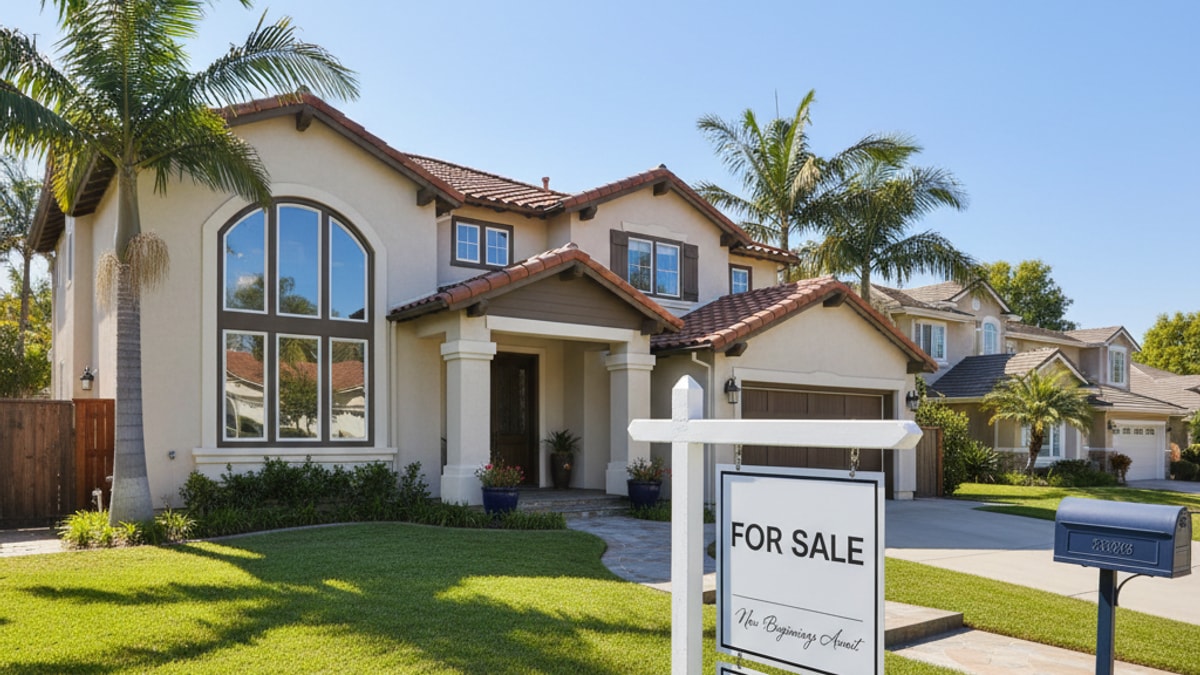
California’s community property laws mean that any home purchased during marriage belongs equally to both spouses. Regardless of whose name appears on the deed. What surprises most divorcing homeowners is that selling a house after divorce in California requires navigating a legal framework that treats real estate as a jointly owned asset until the court says otherwise. A Stanford Law School analysis of family law cases in California found that 68% of divorcing couples who jointly owned property faced unexpected delays because one spouse didn’t understand that court approval is required before any sale can close.
We’ve worked with hundreds of divorcing homeowners across California. The gap between a clean transaction and a contested mess comes down to three things most divorce attorneys don’t emphasize: timing the sale correctly relative to the decree, understanding California’s ATRO restrictions, and knowing when a buyout makes more financial sense than a sale.
How do you sell a house after divorce in California?
To sell a house after divorce in California, both spouses must agree to the sale and sign all closing documents, or obtain a court order authorizing one spouse to act alone. The proceeds are split according to the divorce settlement agreement or court order. Typically 50/50 unless other assets offset the equity. Most sales close within 60–90 days once both parties sign a listing agreement, though court approval adds 30–60 days if the divorce isn’t finalized.
The direct answer is yes, you can sell. But California law requires both spouses’ consent or a court order even after separation. The common mistake is assuming that a signed separation agreement gives one spouse unilateral authority to list and sell. It doesn’t. California Family Code Section 2040 imposes ATROs the moment divorce papers are filed, which freeze all transfers, encumbrances, or sales of community property until the court lifts the order or the divorce is final. This article covers the exact sequence for selling a house after divorce in California, the three decision points that determine whether a buyout or sale is optimal, and the timeline differences between selling before versus after the decree.
California Community Property Rules for Divorcing Homeowners
California is one of nine community property states, which means any asset acquired during the marriage. Including real estate. Is owned 50/50 by both spouses regardless of whose income paid the mortgage or whose name is on the title. The date of separation establishes the cutoff: appreciation or depreciation in the home’s value after that date may be classified as separate property if one spouse can prove they solely maintained the property. California Family Code Section 2552 defines the date of separation as when one spouse subjectively intends to end the marriage and objectively demonstrates that intent through conduct. Moving out, filing for divorce, or ceasing marital financial commingling.
The ATRO (Automatic Temporary Restraining Order) takes effect immediately when divorce papers are served. Under California Family Code Section 2040, both spouses are prohibited from transferring, encumbering, hypothecating, concealing, or disposing of any community property without written consent of the other party or a court order. This means listing the house, accepting an offer, or signing closing documents without both spouses’ agreement violates the ATRO. And the court can void the transaction, impose sanctions, or hold the violating spouse in contempt. We’ve seen cases where a seller signed a purchase agreement alone, believing their spouse’s verbal consent was sufficient. The title company flagged the issue at escrow, the sale collapsed, and the listing went stale.
The equity split depends on the divorce settlement or court order, not the deed. If the decree awards one spouse 60% and the other 40% due to offsets from other assets, that’s the distribution regardless of whose name appears on title. California courts apply the “community estate” framework: all assets and debts acquired during marriage are pooled, valued at the date of separation or trial, and divided equally unless the parties agree otherwise or the court finds an unequal split is just and equitable under Family Code Section 2550.
Selling Before the Divorce Is Final vs. After the Decree
Selling before the divorce decree offers speed but requires ironclad agreement. Both spouses must sign the listing agreement, all disclosures, the purchase agreement, escrow instructions, and the final HUD-1 settlement statement. If one spouse refuses to cooperate at any stage, the sale cannot proceed without a court order. Which reintroduces delay. The advantage is liquidity: proceeds can be distributed immediately, eliminating post-divorce disputes over who pays the mortgage or maintains the property while it sits on the market. A Zillow study of California divorce sales found that homes sold before the decree finalized closed 22 days faster on average than homes sold after, because both parties were motivated to resolve the issue and move forward.
Selling after the decree simplifies authority but doesn’t eliminate coordination. The divorce judgment specifies how the home is to be divided. Sale and equal split, buyout with refinance, or deferred sale (common when minor children live in the home). If the decree orders a sale, it typically names one spouse as the agent authorized to list, negotiate, and execute documents on behalf of both parties. This eliminates the logistical problem of coordinating signatures from two people who no longer live together or communicate willingly. However, the decree must be recorded and provided to the title company as proof of authority. California requires a certified copy of the judgment, not a photocopy.
The deferred sale option under California Family Code Section 3800 allows the custodial parent to remain in the home until the youngest child turns 18, graduates high school, or another triggering event occurs. The non-custodial parent retains their ownership interest but cannot force a sale during the deferral period. When the triggering event occurs, the home must be sold and proceeds divided per the original decree. This creates a potential problem: if the custodial parent refinances during the deferral period and removes the other spouse from the loan without a buyout, that spouse still owns half the equity but has no mortgage obligation. We’ve handled cases where the custodial spouse assumed this erased the other party’s interest. It doesn’t. The equity split at eventual sale still applies unless a formal buyout occurred.
The Three-Path Decision: Sell, Buyout, or Deferred Sale
A buyout makes sense when one spouse has the income to qualify for a refinance and enough liquid assets or settlement offsets to pay the other spouse’s equity share. California family courts allow buyouts using offsets from retirement accounts, other real estate, or future support obligations. Example: if the home has $300,000 in equity and the non-buying spouse is entitled to $150,000, the buying spouse can offset that with $150,000 from their 401(k) or pension. The challenge is refinancing: the buying spouse must qualify for the new mortgage based solely on their income, and California lenders treat divorce buyouts as cash-out refinances, which carry stricter debt-to-income and loan-to-value limits.
A forced sale is the default when neither spouse can afford a buyout or both want liquidity. California courts order partition sales under Code of Civil Procedure Section 872.010 when co-owners cannot agree on disposition. The court appoints a referee, who lists the property, accepts the highest qualified offer, and distributes proceeds per the judgment. Partition sales typically recover 10–15% less than market-rate sales because the referee prioritizes speed over price optimization. They cannot reject low offers without court approval, and buyers know the seller is motivated by legal compulsion, not financial strategy.
The deferred sale benefits children but creates financial risk for the non-custodial parent. Under Family Code Section 3800, the court can order a deferred sale when it’s in the children’s best interest to remain in the family home and the custodial parent can afford the mortgage and upkeep. The non-custodial parent typically continues paying half the mortgage even though they don’t live there. Our team has found that deferred sales work cleanly only when the decree specifies: who pays the mortgage, who is responsible for maintenance and repairs, how property tax increases are allocated, and what happens if the custodial parent stops making payments. Without these terms, disputes arise years later when the home is finally sold and one party claims unequal contribution.
Sell House After Divorce California: Comparison
| Sale Timing | Court Approval Required | Average Timeline | Consent Requirement | Best For | Professional Assessment |
|---|---|---|---|---|---|
| Before Decree | Yes (if contested) | 60–90 days | Both spouses must sign all documents | Couples who agree on terms and want immediate liquidity | Fastest path but requires ongoing cooperation. Breaks down if one spouse becomes uncooperative mid-transaction |
| After Decree | No (decree is the authority) | 90–120 days | Decree specifies authorized agent | Couples with minimal communication who need clear authority | Eliminates coordination but adds decree recording requirements. Delays if judgment isn’t certified |
| Deferred Sale (Family Code 3800) | Yes (court orders deferral) | Months to years (until triggering event) | Decree specifies terms | Families with minor children when stability matters | Protects children but creates financial risk for non-custodial parent. Works only with detailed cost-sharing terms |
| Partition Sale (court-ordered) | Yes (court appoints referee) | 120–180 days | Neither spouse must agree | Deadlocked couples who cannot agree on price or terms | Guarantees sale but recovers 10–15% below market. Use only as last resort when negotiation fails |
Key Takeaways
- California’s Automatic Temporary Restraining Orders (ATROs) freeze all asset transfers the moment divorce papers are filed, meaning you cannot sell a house after divorce in California without both spouses’ written consent or a court order.
- Community property law awards each spouse 50% of the home’s equity regardless of whose name is on the deed, unless the divorce settlement or court order specifies a different split based on offsets from other assets.
- Selling before the decree finalizes closes 22 days faster on average but requires both spouses to sign every document from listing to closing. One uncooperative spouse kills the deal.
- A buyout requires the buying spouse to refinance based solely on their income and pay the other spouse’s equity share through cash, retirement account offsets, or settlement credits.
- Deferred sales under Family Code Section 3800 allow the custodial parent to remain in the home until a triggering event, but the non-custodial parent retains ownership and typically continues paying half the mortgage despite not living there.
- Partition sales ordered by the court recover 10–15% below market value because the court-appointed referee prioritizes speed over price optimization and cannot reject low offers without approval.
What If: Sell House After Divorce California Scenarios
What If One Spouse Refuses to Sign the Listing Agreement?
File a motion with the family court under California Family Code Section 2045 requesting an order authorizing one spouse to act as the sole listing and selling agent. The motion must demonstrate that the refusal is unreasonable and contrary to both parties’ financial interest. The court typically grants the motion if the refusing spouse cannot articulate a valid reason for blocking the sale. Spite or obstruction aren’t recognized as legitimate objections. Once the order is issued, the authorized spouse can list, negotiate, and sign all documents without further consent, though proceeds are still distributed per the divorce settlement.
What If the Home Has Negative Equity When We Sell?
California treats negative equity as a community debt. Both spouses are equally responsible for the shortfall unless the decree specifies otherwise. If the home sells for less than the mortgage balance, the lender may pursue a deficiency judgment against both borrowers under California Code of Civil Procedure Section 580b. Though this is prohibited for purchase-money loans on primary residences. If the loan was a refinance or HELOC, the lender can sue for the deficiency. Most divorcing couples negotiate a short sale, where the lender agrees to accept less than the full balance, or they include the debt split in the divorce settlement.
What If the Divorce Decree Orders a Sale but We Can’t Agree on the List Price?
Return to family court and request that the judge set the list price based on a court-ordered appraisal. Under California Code of Civil Procedure Section 873.010, the court can appoint a neutral appraiser, split the cost between the parties, and issue an order setting the minimum acceptable list price at the appraised value. This eliminates the deadlock. If one spouse still refuses to cooperate after the court sets the price, the judge can hold that spouse in contempt or convert the process to a partition sale under court supervision.
The Unvarnished Truth About Selling Real Estate in a California Divorce
Here’s the honest answer: most couples who sell a house after divorce in California lose money not because the market turned against them, but because they waited too long to act while paying a mortgage on a vacant property neither of them wanted. The carrying costs. Mortgage, property tax, insurance, and utilities. Compound every month the home sits unsold. A six-month delay at $4,000 per month in carrying costs erodes $24,000 in equity before the sale even closes. We’ve seen divorcing couples spend months arguing over whether to list at $875,000 or $900,000, only to accept $850,000 six months later after the market softened and the home showed signs of deferred maintenance.
The second mistake is assuming the spouse who moved out has no say in the sale. California law is explicit: both spouses own the home equally until the court says otherwise, and the ATRO enforces that rule with contempt penalties. Listing the home without your spouse’s written consent doesn’t just void the transaction. It gives your spouse grounds to claim you’re hiding assets or acting in bad faith, which can cost you in the final settlement. The calculus is simple: cooperation costs you nothing, obstruction costs you everything.
The hardest truth is that deferred sales sound family-friendly but often fail financially. The non-custodial parent pays half the mortgage on a home they don’t live in, cannot deduct the expense because they don’t occupy the property, and watches their credit score drop if the custodial parent misses payments. When the home is finally sold years later, maintenance neglect and market shifts often mean the equity split is smaller than it would have been at divorce. If you’re considering a deferred sale, make the decree specify who pays for capital repairs, what happens if the custodial parent defaults, and whether the non-custodial parent gets credit for mortgage payments above their decreed share.
Selling a house after divorce in California is a legal process before it’s a real estate transaction. The couples who navigate it cleanly are the ones who treat the home as a financial asset to be divided. Not a battleground for unresolved grievances. If you’re ready to move forward, Home Helpers at homehelpersgroup.devonsprague.us/ provides guidance on California divorce sales with transparent processes, BBB accreditation, and a team that understands the legal requirements. The sooner you act, the more equity you keep. Delaying the decision doesn’t make it easier. It just makes it more expensive.
Selling your home during a California divorce means balancing emotional weight with financial necessity. But the legal framework is structured to ensure both spouses walk away with their fair share if they approach the process with transparency. The equity you protect today funds the next chapter for both of you. Treat it like the asset it is, not the symbol of what ended.
Frequently Asked Questions
Can one spouse sell the house without the other’s permission during a California divorce?
No. California’s Automatic Temporary Restraining Orders (ATROs) under Family Code Section 2040 prohibit either spouse from selling, transferring, or encumbering community property without written consent from the other spouse or a court order. Violating the ATRO can result in the sale being voided, contempt charges, and financial penalties.
How is home equity divided when you sell a house after divorce in California?
California’s community property law presumes a 50/50 split of all equity accumulated during the marriage, regardless of whose name is on the deed. The divorce settlement or court order may specify a different split if other assets offset the equity — for example, one spouse receives 60% of the home equity in exchange for the other spouse keeping the entire retirement account.
What happens if one spouse refuses to cooperate with the sale after the divorce decree orders it?
The spouse authorized by the decree to act as selling agent can proceed without the uncooperative spouse’s further consent. If the uncooperative spouse actively obstructs the sale — refusing to vacate the property, denying access for showings, or interfering with inspections — the cooperative spouse can file a motion for contempt, and the court can impose fines, order sheriff-supervised access, or convert the process to a partition sale under court supervision.
How much does it cost to sell a house after divorce in California?
Total closing costs typically range from 8–10% of the sale price, including real estate agent commissions (5–6%), title insurance, escrow fees, transfer taxes, and any negotiated buyer credits. On a $700,000 home, expect $56,000–$70,000 in total costs before the proceeds are split. If the sale is court-supervised as a partition action, add $5,000–$15,000 in referee fees and legal costs.
Can I buy out my spouse’s share of the house instead of selling it?
Yes, if you can qualify for a refinance based solely on your income and pay your spouse their equity share in cash or through offsets. California courts allow buyouts using retirement account distributions, other property, or future support obligations. The buying spouse must remove the other spouse from the mortgage through a refinance — assumption alone doesn’t eliminate the non-buying spouse’s liability if their name remains on the loan.
What is a deferred sale under California Family Code Section 3800, and when does it apply?
A deferred sale allows the custodial parent to remain in the family home with minor children until a triggering event — typically the youngest child turning 18 or graduating high school. The court orders this when it’s in the children’s best interest and the custodial parent can afford the mortgage. The non-custodial parent retains ownership but typically continues paying half the mortgage. The home is sold when the triggering event occurs, and proceeds are divided per the original decree.
Do both spouses need to sign closing documents if the divorce decree already ordered the sale?
If the decree names one spouse as the authorized agent to execute all documents, only that spouse’s signature is required — but the title company will require a certified copy of the recorded judgment as proof of authority. If the decree is silent on who signs, both spouses must sign. Most title companies in California refuse to close without either both signatures or a court order explicitly authorizing one party to act alone.
What is a partition sale, and how does it differ from a standard divorce home sale?
A partition sale is a court-supervised forced sale ordered under California Code of Civil Procedure Section 872.010 when co-owners cannot agree on terms. The court appoints a referee who lists the property, accepts the highest qualified offer, and distributes proceeds per court order. Partition sales recover 10–15% below market value on average because the referee cannot reject offers without court approval and buyers know the seller is legally compelled to close.
Can I force my spouse to sell the house if they want to keep it but can’t afford the buyout?
Yes. If you file a motion for partition sale under California Code of Civil Procedure Section 872.010, the court will order the home sold if your spouse cannot refinance and buy out your equity share within a reasonable timeframe set by the court — typically 60–120 days. The court’s priority is equitable distribution, and it will not allow one spouse to hold the asset hostage when the other spouse is entitled to their share.
What happens to mortgage payments while the house is listed for sale during a California divorce?
Both spouses remain liable for the mortgage until the sale closes and the loan is paid off, regardless of who lives in the home. If one spouse stops paying their share, the other can pay the full amount to protect their credit and seek reimbursement through the court. California judges typically order the spouse occupying the home to pay the mortgage as a condition of exclusive use, but this must be formalized in a court order — a verbal agreement won’t hold up if payments stop.
