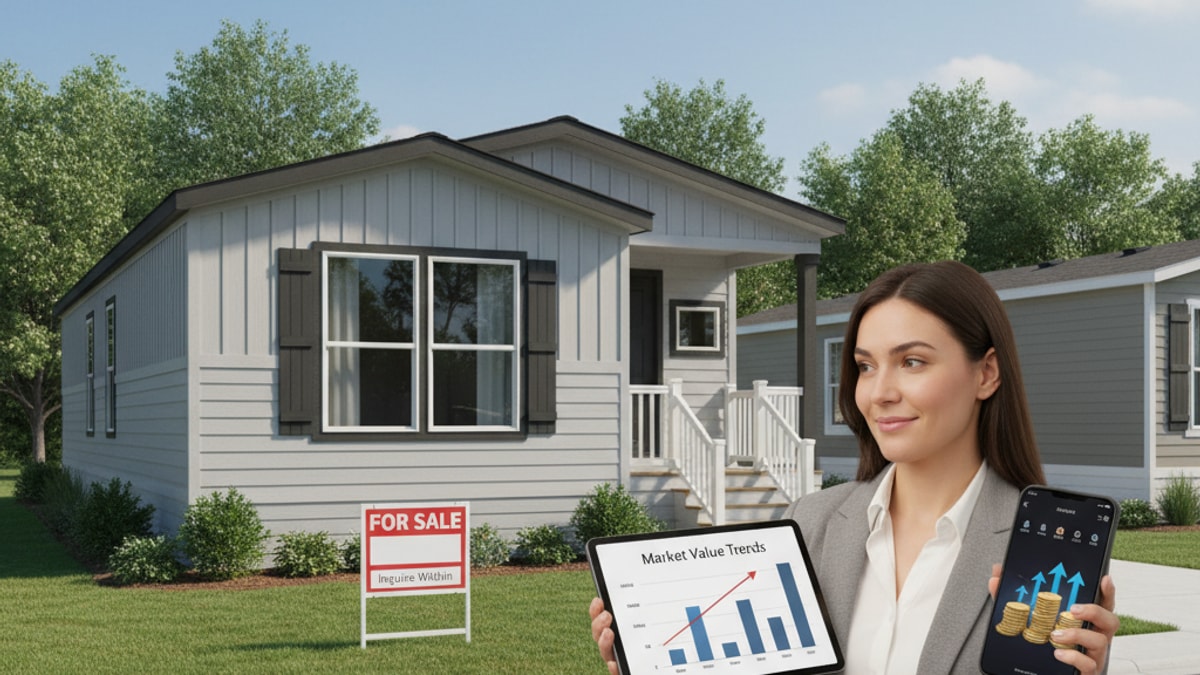
It’s the single most pressing question for every owner thinking about a move: how much can I sell my mobile home for? You’ve likely spent hours searching online, looking at listings, and trying to piece together a number that feels right. The truth is, it’s not a simple calculation. It’s a nuanced blend of art and science, data and gut feeling, and it’s a question our team at Home Helpers has helped hundreds of homeowners answer with confidence.
Let’s be honest, arriving at the right price is crucial. Price it too high, and your home will sit on the market, collecting dust and becoming stale in the eyes of potential buyers. Price it too low, and you’re leaving hard-earned money on the table. We’re here to walk you through the exact same process our professionals use, breaking down the formidable task of valuation into clear, manageable steps. This isn’t just about finding a number; it’s about understanding the why behind it, so you can enter the market with a strategy that works.
The Core Factors That Dictate Your Mobile Home’s Value
Before you can even think about a listing price, you have to do an unflinching audit of the asset itself. A mobile home’s value is a composite score built from several critical, non-negotiable elements. Ignoring even one of these can lead to a catastrophic miscalculation. We’ve seen it happen.
Age and Manufacturer: This is the starting block. Just like with traditional homes, the year your home was built matters significantly. However, with manufactured homes, there’s a pivotal date: June 15, 1976. Homes built after this date are subject to the HUD code for manufactured housing, which sets standards for construction, durability, and safety. A post-HUD home is almost always going to be valued higher than a pre-HUD home. The manufacturer also plays a role. Brands known for quality construction and longevity—like Clayton, Champion, or Fleetwood—often hold their value better than lesser-known or defunct brands. Think of it like the pedigree of your home.
Size and Layout: Square footage is a primary driver of price. It’s simple math. More space generally equals more value. But it’s not just about the raw numbers. The layout is incredibly important. Does it have an open floor plan? Are the bedrooms a decent size? Does it have two bathrooms or just one? A sprawling 3-bed, 2-bath double-wide will command a much different price than a cozy single-wide, even if they’re in the same park. We’ve found that modern, open-concept layouts are in high demand and can give even a slightly older home a significant competitive edge.
Overall Condition: This is where you have the most control, and honestly, where many sales are won or lost. We’re talking about a top-to-bottom assessment.
- The Roof: Is it leaking? Are the shingles curled or missing? A roof nearing the end of its lifespan is a major red flag for buyers and a significant bargaining chip against you.
- The Floors: Are they solid? Soft spots are a glaring sign of water damage, a deal-killer for many. The type of flooring matters, too. Worn-out, stained carpeting can drag down the entire feel of a home, while clean laminate or vinyl plank flooring can give it an immediate, modern lift.
- Plumbing and Electrical: Any known issues here must be addressed. Leaky faucets, slow drains, or flickering lights are more than just annoyances; they signal potential systemic problems that can scare buyers away. A home with updated PEX plumbing or a recently inspected electrical panel is a much easier sell.
- HVAC System: The age and functionality of your heating and air conditioning are paramount. A brand-new, energy-efficient unit is a massive selling point. An ancient, clanking furnace is a liability you’ll have to account for in the price.
We can’t stress this enough: a buyer is purchasing their future peace of mind. A home that appears meticulously maintained, even if it’s older, will always sell for more than a neglected one.
The Land Question: Do You Own It or Rent It?
This is perhaps the single biggest fork in the road for mobile home valuation. It fundamentally changes the nature of your asset and how it’s sold. This is a big deal.
If you own the land your home sits on, you’re selling real property. This is a significant, sometimes dramatic shift in value. The sale will be handled much like a traditional home, involving real estate agents, deeds, and title insurance. The value is a combination of the structure and the land, which almost always appreciates over time. Lenders are also far more willing to finance a mobile home sold with land, opening you up to a much larger pool of potential buyers.
On the other hand, if your home is in a park or on land you don’t own, you’re selling chattel, or personal property. The transaction is more like selling a vehicle. You’re selling the structure itself, and the buyer will either need to move it (which is incredibly expensive) or be approved by the park management to take over the lot lease. The value is based solely on the depreciating asset—the home—and is heavily influenced by the quality of the park and the monthly lot rent. High lot rent can severely depress the selling price of your home, regardless of its condition.
This distinction is everything. Make sure you know exactly what you’re selling.
Decoding Your Local Market: Location is Everything
You’ve heard it a million times with real estate, and it’s just as true for manufactured homes. Location, location, location. But for a mobile home, ‘location’ has a few different layers.
First, there’s the park itself (if applicable). What’s its reputation? Is it clean, safe, and well-managed? Are the amenities (like a pool or clubhouse) in good shape? A home in a desirable, 5-star senior community will fetch a far higher price than the exact same model in a run-down, all-ages park with a bad reputation. The park’s rules and lot rent are also massive factors. Our team always pulls the numbers on this first.
Second, you need to look at the broader city or region. Is it a growing area with a strong job market? Are people moving in or out? Local economic health directly impacts housing demand, including for manufactured homes. High demand means higher prices.
Finally, and most importantly, you need to find comparable sales, or ‘comps.’ These are recently sold mobile homes that are as similar to yours as possible in terms of age, size, condition, and location (ideally in the same park). This is the most reliable data you can get. Looking at what buyers were actually willing to pay for homes like yours in the last 3-6 months gives you a realistic, data-backed price range. Listing prices are just a starting point; sold prices are the truth.
Upgrades and Renovations: What Actually Adds Value?
Many sellers believe that the money they pour into upgrades will come right back to them at closing. That’s rarely the case. Some upgrades have a fantastic return on investment (ROI), while others are just money down the drain. It’s a difficult, often moving-target objective to hit perfectly.
Here’s what we’ve learned adds real, tangible value:
- Curb Appeal: First impressions are everything. New skirting, a freshly painted porch, clean siding, and some simple landscaping can dramatically increase perceived value for a relatively low cost.
- Kitchen and Bath Updates: You don’t need a full gut job. But replacing dated countertops, painting cabinets, and installing new, modern fixtures can make a home feel years younger. These are the rooms that sell homes.
- Energy Efficiency: New double-pane windows and added insulation are huge selling points. Buyers know this will save them money every month on utility bills, and they’re often willing to pay a premium for it.
What doesn’t add much value? Overly personal customizations. That custom-built entertainment center or the bold, bright accent wall you love might not appeal to the average buyer. When you’re preparing to sell, the goal is to create a clean, neutral canvas that allows buyers to envision themselves living there.
Methods for Determining Your Home’s Price
Okay, you’ve assessed your home and the market. Now, how do you synthesize all that information into a single number? There are a few standard methods, each with its own pros and cons. Our experience shows that using a combination of these is the best approach.
| Method | Cost | Accuracy | Best For |
|---|---|---|---|
| NADA Manufactured Housing Guide | Low (~$50-$100) | Moderate | Getting a quick, standardized baseline value, especially for lenders and insurers. It’s like the ‘Kelley Blue Book’ for mobile homes. |
| Professional Appraiser | High (~$300-$500) | High | Getting an official, defensible valuation for sales involving financing, especially when land is included. The most accurate, but costly. |
| Real Estate Agent CMA | Free (with listing) | High | Sellers who want a market-driven price based on recent local comps and professional expertise. Agents know what’s selling right now. |
| DIY Comparable Sales Analysis | Free | Low to Moderate | Sellers who are deeply familiar with their local park/market and can objectively find and analyze truly comparable sold properties. High risk of bias. |
We generally recommend starting with a look at recent comps and then, if you’re serious about selling, getting a Comparative Market Analysis (CMA) from a professional who specializes in manufactured homes. They have access to sales data you don’t and can provide an unbiased perspective. If you’re looking for more guidance, our team is always available to help; you can Contact us directly through our site.
Common Mistakes That Sabotage Your Selling Price
Over the years, our team at Home Helpers has seen sellers make the same heartbreaking mistakes over and over again. These are the unforced errors that can cost you thousands or leave your home languishing on the market for months.
- Emotional Overpricing: This is number one, without a doubt. You have memories in this home. You remember what you paid for it and all the work you’ve put in. We get it. But buyers don’t care about your memories or what you ‘need’ to get out of the sale. They care about fair market value. Pricing based on emotion instead of data is the fastest way to fail.
- Ignoring Obvious Repairs: That dripping faucet, the cracked window, the soft spot in the hallway. You might be used to them, but to a buyer, they are giant, flashing red lights that scream ‘neglect’ and ‘hidden problems.’ Every small, deferred maintenance issue gives a buyer leverage to lowball your price. Fix them. It’s that simple.
- Bad Photography: In today’s market, your first showing happens online. Dark, blurry, cluttered photos taken on a phone will get you scrolled past every single time. You need bright, clear, wide-angle shots that make your home look inviting and spacious. If you’re not a great photographer, hire someone who is. It’s an investment that pays for itself many times over.
- Being Unprepared for Showings: Clutter, dirt, and weird smells are instant turn-offs. When a buyer walks in, they should be able to picture their own life there, not be distracted by your personal belongings or a dirty bathroom. The home needs to be clean, decluttered, and smelling fresh for every single showing. No exceptions.
Avoiding these pitfalls requires discipline and an objective eye. It means transitioning from thinking like a homeowner to thinking like a savvy seller. You can find more tips like these across our company Blog, where we share insights to help homeowners succeed.
Preparing for the Sale: Our Professional Recommendations
So, you’re ready to move forward. What’s the game plan? Getting top dollar requires preparation. Here’s a checklist we provide to our clients to get their homes market-ready.
- Deep Clean & Declutter: Go room by room. Pack up personal items, knick-knacks, and anything you don’t use daily. Rent a storage unit if you have to. The goal is to maximize the sense of space. Then, clean like you’ve never cleaned before. Baseboards, windows, light fixtures, inside cabinets—everything.
- Handle the ‘Hit List’: Make that list of all the small repairs you’ve been putting off and tackle it. Tighten loose handles, replace burnt-out bulbs, caulk the tub, and touch up scuffed paint. These little details create an impression of a well-cared-for home.
- Boost Curb Appeal: As we mentioned, this is huge. Power wash the siding, wash the windows, mow the lawn, and maybe plant some flowers. Make sure the entrance is welcoming. It sets a positive tone before they even step inside.
- Gather Your Paperwork: Get all your documents in order. You’ll need the title for the home, any warranties for appliances or major systems (like the roof or HVAC), and a copy of the park rules and your lot lease agreement if applicable. Being organized makes the process smoother and shows buyers you’re a serious, responsible seller.
Taking these steps proactively puts you in the driver’s seat. It allows you to present your home in its best possible light, justify your asking price, and anticipate the questions and concerns of potential buyers. The story of our company, which you can read about on our About page, is built on helping people navigate these complex but critical preparations.
Ultimately, figuring out how much can I sell my mobile home for is a process of objective evaluation and strategic preparation. It requires you to take a step back, look at your home through the critical eyes of a buyer, and ground your expectations in the hard data of the current market. It’s not always easy, but understanding these dynamics is the absolute key to a successful, profitable sale. You’re not just selling a structure; you’re selling a future for someone else, and presenting it properly makes all the difference.
Frequently Asked Questions
Does a new roof significantly increase my mobile home’s value?
A new roof doesn’t typically add dollar-for-dollar value, but it’s a massive selling point. It removes a major objection for buyers and can help your home sell faster and closer to the asking price, as it represents significant future savings and peace of mind for the new owner.
How much does the park’s lot rent affect my home’s sale price?
Lot rent has a substantial impact. A higher lot rent reduces a buyer’s overall affordability, which can force you to lower your home’s price to compensate. Homes in parks with lower, more stable lot rents are generally more desirable and can command higher sale prices.
Is it worth it to update my kitchen before selling?
Minor, cosmetic updates usually offer a great return. We’re talking about painting cabinets, updating hardware, and perhaps installing a new faucet or modern countertop. A full, expensive remodel is rarely necessary and you’re unlikely to recoup the entire cost.
Should I use a real estate agent who specializes in manufactured homes?
Absolutely. An agent who understands the nuances of mobile home sales—from chattel financing to park approvals—is invaluable. Their expertise can help you avoid common pitfalls, price your home correctly, and navigate the unique paperwork involved in the transaction.
How long does it take to sell a mobile home?
The timeline can vary widely based on your location, price, and the condition of the home. A well-priced home in a desirable park might sell in a few weeks, while an overpriced home in a less popular area could sit for months. Proper preparation and pricing are key to a quicker sale.
Do I need a professional appraisal to sell my mobile home?
It’s not always required, but it can be very helpful. If the buyer is getting a loan, their lender will almost certainly require one. For cash sales, it’s optional, but having a formal appraisal can provide strong justification for your asking price during negotiations.
What’s the difference between a pre-HUD and post-HUD home?
Post-HUD homes were built after June 15, 1976, and conform to federal standards for safety and construction. They are generally easier to finance and insure, and as a result, they typically hold their value better and sell for more than pre-HUD homes.
Will removing the ‘hitch’ or tongue increase my home’s value?
No, removing the hitch does not increase the monetary value. In fact, we advise against it. The hitch is necessary if the home ever needs to be moved, and removing it can create complications for future owners or for the park.
How important are energy-efficient upgrades like new windows?
Very important. Today’s buyers are increasingly conscious of utility costs. Energy-efficient windows, good insulation, and a modern HVAC system are strong selling points that can justify a higher price and make your home more attractive than comparable listings.
Can I sell my mobile home ‘as-is’?
You certainly can, but you must be prepared to price it accordingly. An ‘as-is’ sale signals to buyers that there are known issues, and they will expect a significant discount to cover the cost and hassle of future repairs. It will almost always result in a lower final price.
Does adding a deck or carport add to the resale value?
Yes, well-maintained outdoor structures like decks, carports, and sheds can definitely add value. They increase the usable living space and functionality of the property. The added value is typically a fraction of the installation cost but makes your home more competitive.
