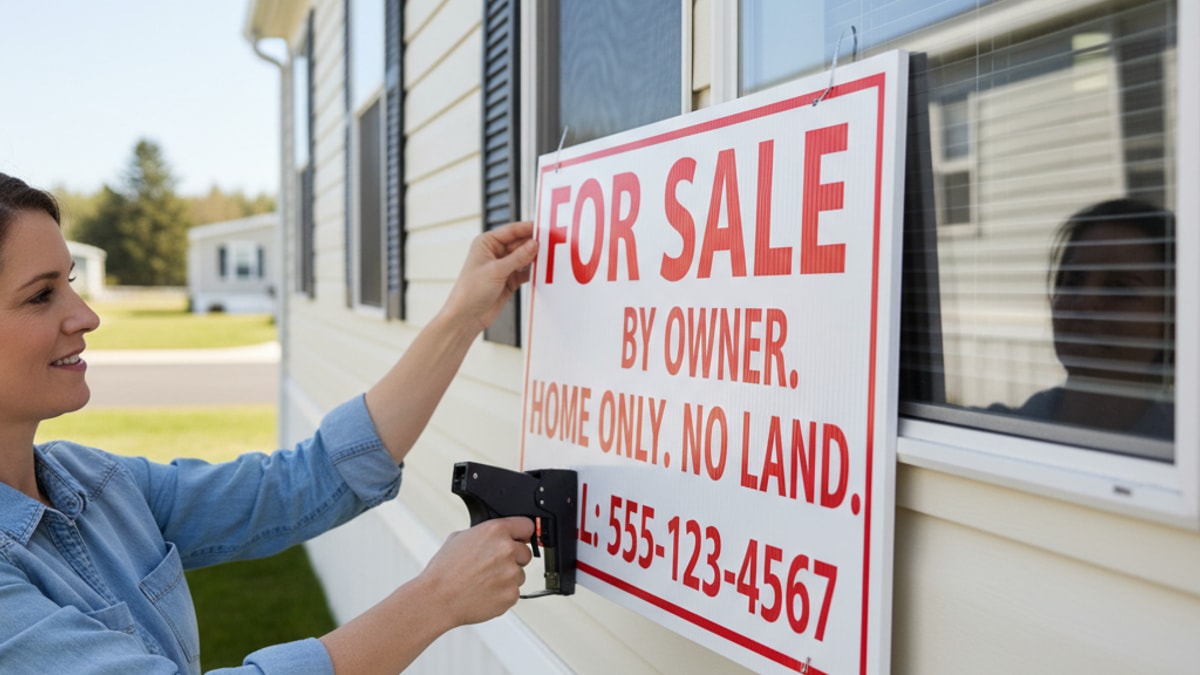
So, you’re ready to sell your mobile home, but there’s a catch: you don’t own the land underneath it. Maybe it’s in a park, on a family member’s property, or in a community where you just pay lot rent. This is a common scenario, but it fundamentally changes the entire selling process. It’s a significant, sometimes dramatic shift from a traditional home sale, and frankly, it’s where we see a lot of people get tripped up.
Our team at Home Helpers has navigated these exact situations for years. We’ve seen the confusion, the frustration, and the costly mistakes that can happen when sellers treat their mobile home like a piece of real estate. It isn’t. We’re here to cut through the noise and give you a straightforward, no-fluff breakdown of how to sell a mobile home without land, drawing directly from our hands-on experience in the field. This is about protecting your investment and making the transition as smooth as possible.
First Things First: It’s Not Real Estate, It’s Chattel
Before you do anything else, you have to get your head around this core concept. A mobile home sold without land is considered “personal property,” not “real property.” The legal term for this is chattel. Think of it more like selling a car, a boat, or an RV than a traditional house. This single distinction impacts everything that follows—the paperwork, the financing options for your buyer, the taxes, and the closing process. It’s comprehensive.
Why does this matter so much? Because a real estate transaction involves a deed, title insurance, and a lengthy closing process often managed by attorneys and title companies. A chattel transaction, on the other hand, is much simpler and revolves around two key documents: a Bill of Sale and the home’s Certificate of Title. Forgetting this fact is the number one mistake we see sellers make. It leads them down the wrong path, causing delays and sometimes even killing a potential sale. Let’s be honest, this is crucial. Understanding you’re selling personal property sets the correct expectations from day one and puts you on the right track.
The Pre-Listing Gauntlet: Your Essential Checklist
Getting ready to sell is more than just cleaning up and taking pictures. For a mobile home in a park or on leased land, your prep work is far more nuanced. Our experience shows that sellers who nail this phase have a dramatically easier time closing the deal. It all comes down to diligence.
Here’s what you need to tackle before a single potential buyer sees your home:
-
Become an Expert on Your Community’s Rules: If your home is in a mobile home park, the park management is a major player in your sale. They aren’t just a landlord; they are a gatekeeper. You need to have an unflinching, honest conversation with the park manager to understand their specific process for selling a home within the community. Ask these critical questions:
- Is there a buyer application process? (The answer is almost always yes.)
- What are the approval criteria? (Credit score, income requirements, background checks, etc.)
- Does the park have the ‘Right of First Refusal’? Some parks reserve the right to buy the home from you at the same price a buyer offers.
- Are there any age restrictions for residents (e.g., 55+ community)?
- What is the current lot rent, and are there any planned increases?
- What are the rules the new owner must follow regarding pets, parking, or home maintenance?
Ignoring the park’s rules is a catastrophic error. We’ve seen promising deals fall apart at the last minute because a buyer didn’t meet the park’s stringent criteria. You must be able to explain this entire process to prospective buyers so there are no surprises.
- Conduct a Brutally Honest Home Assessment: Now it’s time to look at your home with a critical eye. What needs fixing? Be objective. A leaky faucet, a soft spot in the floor, or a window that doesn’t seal properly might seem minor to you, but they are giant red flags for a buyer. You have two main paths: fix the issues to command a higher price, or sell the home ‘as-is’ at a discount. There’s no single right answer; it depends on your budget, timeline, and the local market. Our team often advises that critical safety and functional repairs (plumbing, electrical, roofing) provide the best return on investment. Cosmetic fixes are less important unless they make the home look neglected.
Pricing: The Art and Science of Finding the Right Number
How do you price a home that doesn’t have land attached? You can’t just look up your neighbor’s recent sale on Zillow. The valuation process is completely different and requires a more specialized approach. Overpricing is a surefire way to have your home sit on the market for months, while underpricing means leaving your hard-earned money on the table.
Here’s the methodology we recommend for zeroing in on a competitive and realistic price:
- Start with the NADA Guide: The NADA Manufactured Housing Appraisal Guide is the industry standard, much like the Kelley Blue Book for cars. It provides a baseline value based on the home’s manufacturer, model, size, and age. It’s not the final word, but it’s the indispensable starting point.
- Investigate Comparable Sales (Comps): This is the most important step. You need to find out what similar mobile homes in your specific park or immediate area have recently sold for. The park manager can sometimes be a great resource for this information. You can also look at online listings on sites like MHVillage, but remember that a listing price isn’t a sale price. Focus on homes with a similar size, age, and condition.
- Factor in Condition and Upgrades: Has the roof been replaced in the last five years? Do you have new energy-efficient windows? Is the HVAC system modern? These upgrades add real value and should be factored into your price. Conversely, an old roof, original single-pane windows, or a dated kitchen will bring the price down from the NADA baseline.
- Consider the Lot Rent: This is a subtle but powerful factor. A home in a park with a low lot rent and great amenities is inherently more valuable than an identical home in a park with high rent and few perks. Why? Because the buyer’s total monthly housing cost will be lower, making your home more attractive. When you mention the lot rent to buyers, frame it as part of the overall value proposition.
Setting the right price is a delicate balance. It requires data, local market knowledge, and an objective view of your property. If you’re struggling, this is one of the key areas where getting professional help can make a massive difference. You can always Contact our team for a no-obligation chat about your home’s potential value.
Marketing Your Home to Find the Perfect Buyer
Once you have your price, it’s time to tell the world. Marketing a mobile home without land is a grassroots effort. You’re targeting a very specific buyer pool—people who want affordable homeownership and are comfortable with the park or leased-land lifestyle.
Your marketing toolkit should include:
- Impeccable Photography: This is non-negotiable. In today’s market, your photos are your first showing. Use a good camera or a modern smartphone, and take pictures during the day when there’s plenty of natural light. Declutter every single room before you shoot. We mean it. Remove personal items, clear off countertops, and make the space feel as large and inviting as possible. Capture the key features: the kitchen, the master bedroom, the living area, and any unique aspects like a porch or garden space.
- A Compelling Online Listing: Your description needs to do more than just list facts. It needs to sell a lifestyle. Instead of saying “3 bed, 2 bath,” talk about the “spacious master suite with a private bath” and “two additional bedrooms perfect for family, guests, or a home office.” Highlight recent upgrades, mention the community amenities (pool, clubhouse, etc.), and be upfront about the lot rent and park application process. Transparency builds trust.
- The Right Platforms: Don’t just stick a sign in the yard. Post your listing on specialized websites like MHVillage.com and ManufacturedHomes.com. These sites are where serious buyers look. Additionally, leverage free platforms like Facebook Marketplace and Craigslist. Often, local Facebook groups for your town or community can be goldmines for finding qualified buyers.
Remember, your goal is to attract a buyer who not only loves your home but can also get approved by the park. Screening potential buyers by asking if they’re familiar with the park’s rules and application process early on can save everyone a ton of time.
The Sale Itself: Choosing Your Path
When it comes to the actual transaction, you generally have a few different routes you can take. Each has its own set of pros and cons, and the best choice depends on your comfort level with the process, your timeline, and your financial goals. Our team at Home Helpers has built our entire business around providing a simpler alternative, but it’s important you understand all your options.
| Feature | For Sale By Owner (FSBO) | Using a Real Estate Agent/Dealer | Selling to a Home Buyer (like us) |
|---|---|---|---|
| Control | Total control over pricing, showings, and negotiations. | Agent handles most of the process, but you have final say. | Zero hassle. We handle everything after the agreement. |
| Cost | No commission fees. You only pay for marketing. | Typically 5-10% commission on the sale price. | No fees, no commissions. We make a fair cash offer. |
| Effort & Time | Very high. You manage all marketing, showings, and paperwork. | Low. The agent does the heavy lifting. | Minimal. A few conversations and one walkthrough. |
| Expertise | You are responsible for all legal and financial steps. | Agent provides expertise on pricing, marketing, and closing. | We are the experts; you don’t need to be. |
| Speed | Can be very slow. Dependent on finding a qualified buyer. | Faster than FSBO, but still reliant on the market. | Extremely fast. We can often close in a matter of days. |
| Certainty | Low. Deals can fall through due to financing or park approval. | Higher than FSBO, but deals can still collapse. | Very high. Our cash offers are firm and not contingent on financing. |
Selling FSBO gives you the most control and saves you from paying a commission, but it puts all the work and all the risk squarely on your shoulders. You have to be the marketer, the scheduler, the negotiator, and the legal expert. Using a specialized mobile home dealer or a real estate agent who understands chattel sales can be a great option if you want professional guidance, but it comes at the cost of a hefty commission.
Then there’s the third path: selling directly to a professional home buying company like Home Helpers. This is the fast-track option. We assess your home and make a fair, no-obligation cash offer. If you accept, we handle all the paperwork and complexities. There are no showings, no waiting for a buyer to get financing, and no commissions to pay. It’s the simplest, most predictable way to sell. This approach isn’t for everyone, but for sellers who prioritize speed, certainty, and convenience, it’s often the perfect solution. You can learn more about our philosophy on our About page.
Sealing the Deal: The Closing Process Demystified
You’ve found a buyer, they’ve been approved by the park, and you’ve agreed on a price. Congratulations! Now it’s time to make it official. The closing process for a mobile home is much faster than a real estate transaction, but it requires meticulous attention to detail.
Here are the critical steps:
This process seems straightforward, and it can be, but every step needs to be done correctly. For more articles and tips on navigating home-related transactions, we regularly post updates to our company Blog.
Selling a mobile home without land is a journey with its own unique map. It requires a different mindset and a different strategy than a traditional home sale. But by understanding the process, preparing diligently, and knowing your options, you can navigate it successfully. It’s about being informed, being prepared, and moving forward with confidence. And if you ever feel overwhelmed, remember that expert help is always available.
Frequently Asked Questions
Can I sell my mobile home if I still have a loan on it?
Yes, you can. The process is similar to selling a car with a loan. The sale price must be enough to cover the remaining loan balance, which will be paid directly to the lender at closing to release the lien and transfer the title.
How long does it typically take to sell a mobile home without land?
The timeline can vary dramatically, from a few days to several months. Key factors include price, condition, location, and the park’s buyer approval process. Selling to a cash buyer like Home Helpers is the fastest option, often closing in a week or less.
Do I need a lawyer to sell my mobile home?
While not always legally required for a chattel sale, we sometimes recommend consulting with an attorney if your situation is complex. This could include issues with the title, liens, or unusual terms in the sale. For most straightforward sales, it’s not necessary.
What is a ‘Bill of Sale’ and is it legally binding?
A Bill of Sale is a legally binding document that records the transfer of personal property from a seller to a buyer. It serves as the official contract, detailing the price, the property being sold (your home), and the date of the transaction.
What if the park owner doesn’t approve my buyer?
This is a significant risk and why pre-screening buyers is so important. If the park rejects your buyer, the deal is off. You will have to put the home back on the market and find another buyer who can meet the park’s requirements.
Am I responsible for any taxes when I sell my mobile home?
You may be responsible for paying any outstanding personal property taxes on the home up to the date of sale. Capital gains tax could also apply if you sell the home for a significant profit, though this is less common. We recommend consulting a tax professional for advice specific to your situation.
What happens if I can’t find my mobile home’s title?
You absolutely cannot sell the home without the title. If it’s lost, you must apply for a duplicate title from your state’s DMV or housing department. Start this process immediately, as it can take several weeks or more.
Should I make repairs before selling or sell ‘as-is’?
This depends on the repair’s cost versus its potential return. Major functional repairs (like a leaky roof or faulty furnace) are usually worth doing. Minor cosmetic issues can often be left for the new owner, but the price should reflect that the home is being sold ‘as-is’.
How do I handle showings safely and effectively?
Always schedule showings by appointment and never show the home alone if you can help it. Ensure the home is clean and well-lit. Be prepared to answer questions about the home and the park rules honestly.
Can a buyer get a mortgage for a mobile home in a park?
Traditional mortgages are for real estate, so they don’t apply here. Buyers will need a ‘chattel loan,’ which is a specialized loan for personal property. These loans often have higher interest rates and stricter credit requirements, which can make it harder for buyers to qualify.
What is the most common mistake sellers make?
Our team has found the most common mistake is not talking to the park manager before listing the home. Understanding the park’s specific rules for selling and for new resident approval is the single most important step you can take to ensure a smooth transaction.
Does the age of the mobile home affect the sale?
Yes, age is a major factor. It affects the home’s value (as reflected in the NADA guide) and a buyer’s ability to get financing, as many lenders have age restrictions. Some parks also have rules about the age of homes allowed in the community.
