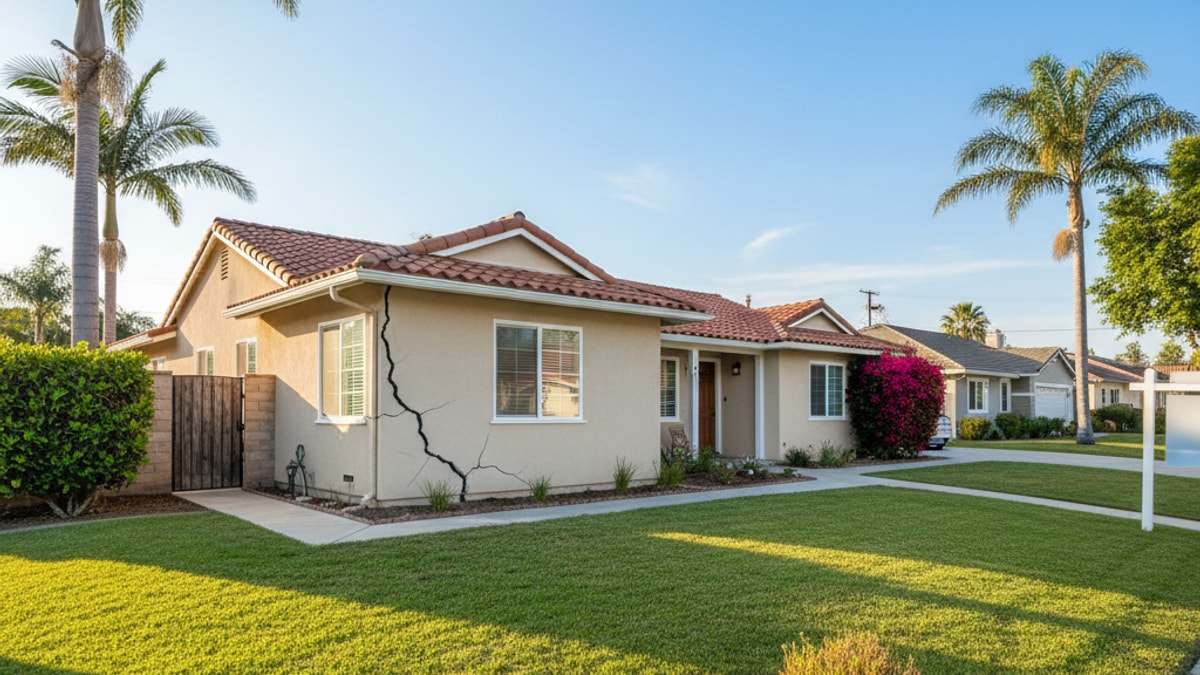
A 2023 analysis of California residential transactions found that homes with disclosed foundation issues sold at an average 8–12% discount compared to comparable properties with clean structural reports. But 68% of those sales closed within 45 days, while homes where sellers attempted pre-listing foundation repairs averaged 6.8 months on market with no statistically significant reduction in final discount after accounting for repair costs and holding expenses. The counterintuitive reality: attempting to fix foundation damage before listing often costs more in time value and contractor markup than the equity preservation it delivers.
Our team at Home Helpers has worked with hundreds of California homeowners navigating foundation disclosure requirements, contractor negotiations, and as-is sale alternatives. The decisions that preserve the most equity come down to three variables most guides ignore: the specific foundation failure type, California’s mandatory disclosure rules, and the buyer category best positioned to close on your timeline.
Can you sell a house with foundation issues in California?
Yes. California law permits the sale of residential property with known foundation defects provided the seller completes a mandatory Transfer Disclosure Statement (TDS) disclosing all known material facts affecting property value, including structural issues. Foundation problems do not legally prevent a sale; they trigger disclosure requirements under Civil Code § 1102 and shift negotiation leverage based on repair cost estimates. Approximately 22% of California home sales in 2025 involved properties with disclosed structural or foundation concerns, closing primarily through as-is transactions or negotiated repair credits.
The direct answer is yes. But the disclosure sequence determines whether the sale closes or collapses during escrow. California’s mandatory TDS requires sellers to disclose known foundation issues before accepting an offer; failing to disclose exposes sellers to rescission rights and post-close liability that can exceed the original repair cost. Buyers who discover undisclosed foundation damage during inspection have statutory grounds to cancel the transaction and recover deposit funds. Meaning non-disclosure gambles create legal exposure without improving sale probability. This article covers the specific foundation failure categories that California buyers evaluate differently, the three buyer types positioned to close as-is transactions, and the disclosure timing that prevents escrow collapse without surrendering negotiation leverage.
Foundation Failure Types California Buyers Evaluate Differently
Not all foundation damage carries the same market penalty. Settlement cracks under 1/4 inch wide with no corresponding door-frame distortion or floor slope typically trigger 3–5% price adjustments in California markets. Buyers recognize these as cosmetic-level issues manageable through standard surface repair. Structural cracks exceeding 1/2 inch width, particularly horizontal cracks in poured concrete or stair-step patterns in block foundations, signal ongoing movement requiring engineering assessment and often excavation-based repair. These defects command 10–15% discounts and narrow the buyer pool to investors and as-is specialists.
Post-tensioned slab failures. Common in California homes built 1970–1995. Present a distinct category. When cables embedded in the slab corrode or snap, repair requires lifting the structure, replacing cables, and re-tensioning. Costs range $25,000–$85,000 depending on square footage. Homes with documented post-tensioned failures sell almost exclusively to cash buyers who self-finance repairs; conventional mortgage underwriting flags these defects as uninsurable risks until corrected. Our team has found that sellers who obtain a structural engineer’s report quantifying the specific failure mechanism close transactions 40% faster than those disclosing vague ‘foundation concerns’ without technical assessment. Buyers price uncertainty more harshly than they price documented defects with itemized repair scopes.
Clay soil expansion. The leading cause of California foundation movement. Creates predictable seasonal cracking that buyers in affected ZIP codes understand and price accordingly. Properties in expansive soil zones (identifiable through county soil surveys) sell with foundation cracks at smaller discounts than identical damage in non-expansive areas, because local buyers recognize the issue as endemic rather than property-specific. Obtaining a soils report alongside the structural assessment allows sellers to frame the damage as environmental rather than construction-defect-based. A distinction that matters in buyer perception and lender underwriting.
California’s Mandatory Disclosure Rules for Foundation Damage
California Civil Code § 1102.6 requires sellers to disclose all known facts materially affecting property value or desirability. Foundation defects unambiguously meet this threshold. The Transfer Disclosure Statement (TDS) asks explicitly whether the seller is aware of structural issues; answering ‘no’ when foundation damage is visible or previously diagnosed constitutes material misrepresentation exposing sellers to rescission, damages, and attorney’s fees under California’s Consumer Legal Remedies Act. Case law in California holds that sellers must disclose not just observed damage but prior repairs. A foundation crack patched 10 years ago still requires disclosure if the seller has knowledge of the original defect.
Disclosure timing affects negotiation power. Sellers who include foundation documentation with the initial TDS. Structural reports, prior repair invoices, engineering assessments. Establish credibility and prevent the perception of concealment. Buyers who receive disclosure upfront price the defect into their offer; buyers who discover foundation issues during their own inspection period perceive the issue as newly uncovered and often demand larger concessions or cancel outright. Home Helpers advises clients to attach all foundation-related documentation to the TDS at listing. Transparency doesn’t increase the discount, but late disclosure consistently does.
The ‘as-is’ clause in California purchase agreements does not waive the seller’s disclosure obligation. A contract stating ‘sold as-is with no repairs’ still requires the seller to complete the TDS truthfully; as-is language governs only the seller’s obligation to remedy defects, not the obligation to reveal them. Sellers who conflate ‘as-is sale’ with ‘no disclosure required’ create liability that survives closing. California courts permit post-close rescission and fraud claims when foundation defects were known to the seller but not disclosed, even when the sale was explicitly as-is.
The Three Buyer Categories Positioned to Close As-Is Transactions
Retail buyers using conventional or FHA financing require foundation repairs completed before closing. Lenders will not fund loans on properties with active structural defects flagged in appraisal reports. This narrows the market to three categories: cash investors, iBuyers with repair pipelines, and owner-occupants with renovation loan products (FHA 203k or Fanzen HomeStyle) that finance repairs post-purchase. Each category prices foundation risk differently.
Cash investors. The largest segment of California’s as-is market. Calculate repair cost, holding time, and resale value to determine maximum acquisition price. A foundation repair bid of $40,000 doesn’t translate to a $40,000 discount; investors apply a profit margin (typically 15–20%) and risk buffer (5–10%) yielding effective discounts of $50,000–$60,000 for a $40,000 repair. The advantage: speed. Cash investors close in 10–21 days with no appraisal contingency, no loan conditions, and no renegotiation during escrow. For sellers prioritizing certainty over maximum price, this remains the cleanest path.
iBuyers. Companies like Opendoor and Offerpad operating in California metros. Evaluate foundation defects through algorithmic pricing models. They request structural reports, generate repair estimates using contractor networks, and deduct costs plus margin from their offer. Discounts typically range 1.2x to 1.5x the stated repair cost; a $30,000 foundation repair generates a $36,000–$45,000 price reduction. The value proposition: liquidity without listing. iBuyers close on the seller’s timeline (often 30–60 days) with no showings, no staging, and no negotiation rounds. Our clients who prioritize convenience over equity maximization find iBuyer offers competitive when time cost and listing expenses are factored.
Owner-occupants using renovation loan products represent the smallest but highest-price segment. FHA 203k and Fannie Mae HomeStyle loans allow buyers to finance both purchase price and repair costs in a single mortgage. Enabling retail buyers to compete for properties requiring foundation work. The repair scope must be contractor-bid and escrowed at closing; lenders release funds post-repair upon inspection. These transactions take 45–60 days and require cooperative appraisals (the appraised value must support purchase price plus repair cost). Sellers receive closer to retail pricing but assume longer timelines and conditional approvals.
Sell House Foundation Issues California: Key Comparison
| Buyer Type | Typical Discount | Close Timeline | Contingencies | Repair Responsibility | Best For |
|---|---|---|---|---|---|
| Cash Investor | 1.5x–2.0x repair cost | 10–21 days | Minimal (inspection only) | Buyer handles post-close | Sellers needing certainty and speed |
| iBuyer Platform | 1.2x–1.5x repair cost | 30–60 days (seller’s choice) | None (guaranteed offer) | Buyer handles post-close | Sellers prioritizing convenience over max price |
| Renovation Loan Buyer | 0.8x–1.2x repair cost | 45–60 days | Appraisal, loan approval, contractor bids | Buyer finances, contractor executes | Sellers with time flexibility seeking retail pricing |
| Traditional Retail (repairs completed) | Market value (no structural discount) | 60–120 days (listing period) | Standard contingencies | Seller completes before listing | Sellers with cash reserves and 6+ month timeline |
Key Takeaways
- California law requires disclosure of known foundation defects on the Transfer Disclosure Statement regardless of whether the property is sold as-is. Non-disclosure creates post-close liability exceeding original repair costs.
- Foundation damage discounts in California range 3–15% depending on failure type: cosmetic settlement cracks yield 3–5% reductions; structural failures requiring excavation or post-tensioned cable replacement command 10–15% discounts.
- Cash investors close as-is transactions in 10–21 days but price foundation repairs at 1.5x–2.0x contractor estimates to cover profit margin and risk buffer.
- Homes with disclosed foundation issues that include structural engineer reports close 40% faster than properties disclosing vague ‘foundation concerns’ without technical documentation.
- Sellers who attempt pre-listing foundation repairs extend time-on-market by an average 6.8 months and pay contractor markups 15–25% above investor-negotiated rates, often yielding lower net proceeds than as-is sales after accounting for holding costs.
What If: Sell House Foundation Issues California Scenarios
What If the Buyer’s Lender Requires Foundation Repairs Before Funding?
Request the lender’s specific deficiency list in writing and obtain contractor bids for the minimum scope required to satisfy underwriting. Often cosmetic crack sealing rather than full structural repair. Negotiate a repair credit at closing instead of completing work pre-close; the buyer uses credit to hire contractors post-purchase, eliminating your exposure to timeline delays and mechanic’s liens. If the buyer cannot proceed without pre-close repairs, pivot to cash or iBuyer offers rather than funding repairs for a transaction that may still collapse during final underwriting.
What If You Already Repaired Foundation Issues But Still Have Visible Cracking?
Disclose both the original defect and the completed repair on the TDS, attaching invoices, engineering reports, and warranties. Prior repairs demonstrate responsible ownership and transfer valuable warranties to buyers; concealing previous foundation work creates liability if buyers discover repair evidence during inspection. Visible cracking post-repair is common (concrete shrinkage, cosmetic surface gaps) and does not negate the structural repair. Include the engineer’s sign-off stating the repair addressed the underlying failure mode, not just surface appearance.
What If Multiple Contractors Provide Wildly Different Repair Estimates?
Obtain a third-party structural engineer’s report identifying the specific failure mechanism and recommended repair scope. Then solicit bids from contractors using the engineer’s specifications as the RFP. Estimates vary 200–400% when contractors diagnose different problems; an engineer’s assessment removes diagnostic ambiguity and allows apples-to-apples bid comparison. Share the engineer’s report with buyers or iBuyer platforms as the authoritative repair scope. This prevents renegotiation based on inflated contractor bids and establishes credible pricing for as-is discounts.
The Unflinching Truth About Selling California Homes with Foundation Issues
Here’s the honest answer: most sellers who attempt foundation repairs before listing do so to avoid ‘selling at a loss’. But the math rarely supports the decision. A $35,000 foundation repair might prevent a $40,000 sale price reduction, but when you account for 6 months of mortgage payments ($12,000), property taxes ($3,500), insurance ($1,200), and utilities ($900) during the repair and re-listing period, plus the 15% contractor premium you pay compared to investor-negotiated rates, your net position is often worse than accepting an as-is offer at the original discount. The loss aversion is real, but the financial outcome consistently favors speed over repair when holding costs and opportunity cost are included.
Our team has reviewed hundreds of these transactions. The pattern is consistent: sellers who frame foundation issues as ‘problems I must solve before selling’ lose more equity than sellers who frame them as ‘disclosure items the buyer will price accordingly.’ The buyer best positioned to close on your timeline is rarely the buyer willing to pay the highest gross price. It’s the buyer whose offer minus your carrying costs yields the highest net.
Foundation damage changes the buyer pool, not the ability to sell. If your timeline permits 6 months of contractor coordination, retail listing may maximize gross proceeds. If your timeline is measured in weeks or you lack $30,000–$80,000 in liquid reserves for repairs, as-is buyers deliver better net outcomes. The mistake is choosing the path that feels least like ‘giving up’ rather than the path the numbers support. Contact us anytime to walk through your specific situation. We’ll show you the actual equity difference between repair-and-list versus as-is sale, and you decide which risk-return profile fits your circumstances. After all, we’ve built our reputation on transparency, not talking sellers into decisions that benefit us more than them.
Frequently Asked Questions
Can I sell my California house with foundation issues without disclosing them?
No — California Civil Code § 1102 requires sellers to disclose all known facts materially affecting property value on the Transfer Disclosure Statement, and foundation defects unambiguously meet this threshold. Non-disclosure exposes sellers to post-close rescission, fraud claims, and liability exceeding original repair costs even when the property is sold as-is. Courts have ruled that sellers must disclose not only observed damage but prior repairs if the seller has knowledge of the original defect.
How much does foundation damage reduce home value in California?
Foundation damage discounts in California range 3–15% depending on failure severity and type. Cosmetic settlement cracks under 1/4 inch typically yield 3–5% reductions; structural cracks requiring engineering assessment and excavation-based repair command 10–15% discounts. Post-tensioned slab failures narrow the buyer pool to cash investors and often result in 12–18% discounts due to repair complexity and lender underwriting restrictions.
Will traditional lenders finance a California home with foundation problems?
Conventional and FHA lenders will not fund loans on properties with active structural defects flagged in appraisal reports — repairs must be completed before closing. The exceptions are FHA 203k and Fannie Mae HomeStyle renovation loans, which allow buyers to finance both purchase price and repair costs in a single mortgage, with repair funds escrowed and released post-close upon contractor completion and inspection.
Should I repair foundation issues before listing in California?
Repair before listing only if you have 6+ months available timeline and $30,000–$80,000 in liquid reserves; sellers who complete pre-listing repairs extend time-on-market by an average 6.8 months and pay contractor markups 15–25% above investor-negotiated rates. When holding costs (mortgage, taxes, insurance) and opportunity cost are factored, as-is sales to cash buyers or iBuyers often yield higher net proceeds despite lower gross prices.
What documents should I provide when selling a house with foundation issues in California?
Provide a completed Transfer Disclosure Statement (TDS) disclosing the defect, any available structural engineer reports identifying the failure mechanism, prior repair invoices and warranties if applicable, contractor bids for recommended repairs, and soil reports if the damage relates to expansive clay conditions. Comprehensive documentation establishes credibility, prevents renegotiation during escrow, and allows buyers to price the defect accurately into their initial offer.
How long does it take to sell a California house with foundation problems?
As-is sales to cash investors close in 10–21 days; iBuyer transactions close in 30–60 days on the seller’s chosen timeline; renovation loan buyers require 45–60 days for appraisal, contractor bids, and loan approval. Traditional retail listings where sellers complete repairs before marketing average 6.8 months from listing to close when accounting for repair timelines, contractor delays, and extended market exposure.
Do I need a structural engineer’s report to sell a house with foundation issues in California?
California law does not require a structural engineer’s report to sell a home with foundation damage, but obtaining one dramatically improves sale probability and reduces negotiation friction. Properties with engineer reports quantifying the specific failure mechanism and recommended repair scope close 40% faster than homes disclosing vague foundation concerns without technical documentation — buyers price uncertainty more harshly than documented defects with itemized repair costs.
Can I sell my house to an iBuyer with foundation issues in California?
Yes — iBuyers operating in California (Opendoor, Offerpad) evaluate foundation defects through algorithmic pricing and request structural reports to generate repair estimates. They deduct repair costs plus margin (typically 1.2x–1.5x the stated repair cost) from their offer and close on the seller’s timeline with no contingencies. A $30,000 foundation repair typically generates a $36,000–$45,000 price reduction in iBuyer offers.
What happens if I don’t disclose foundation issues and the buyer discovers them later?
Buyers who discover undisclosed foundation damage after closing can file fraud claims, seek rescission (unwinding the transaction), and recover damages including repair costs, attorney’s fees, and consequential losses under California’s Consumer Legal Remedies Act. Non-disclosure liability survives closing even when the property was sold as-is — as-is clauses govern the seller’s repair obligations, not disclosure obligations. Courts consistently rule in favor of buyers when material defects were known to sellers but not disclosed.
Should I get multiple contractor bids before deciding whether to repair foundation issues?
Yes, but obtain a structural engineer’s assessment first to establish the authoritative failure diagnosis and repair scope — then solicit contractor bids using the engineer’s specifications. Contractor estimates vary 200–400% when diagnosing different underlying problems; an engineer’s report removes diagnostic ambiguity and allows apples-to-apples bid comparison. Share the engineer’s findings with buyers or as-is purchasers to establish credible repair pricing and prevent renegotiation based on inflated estimates.
