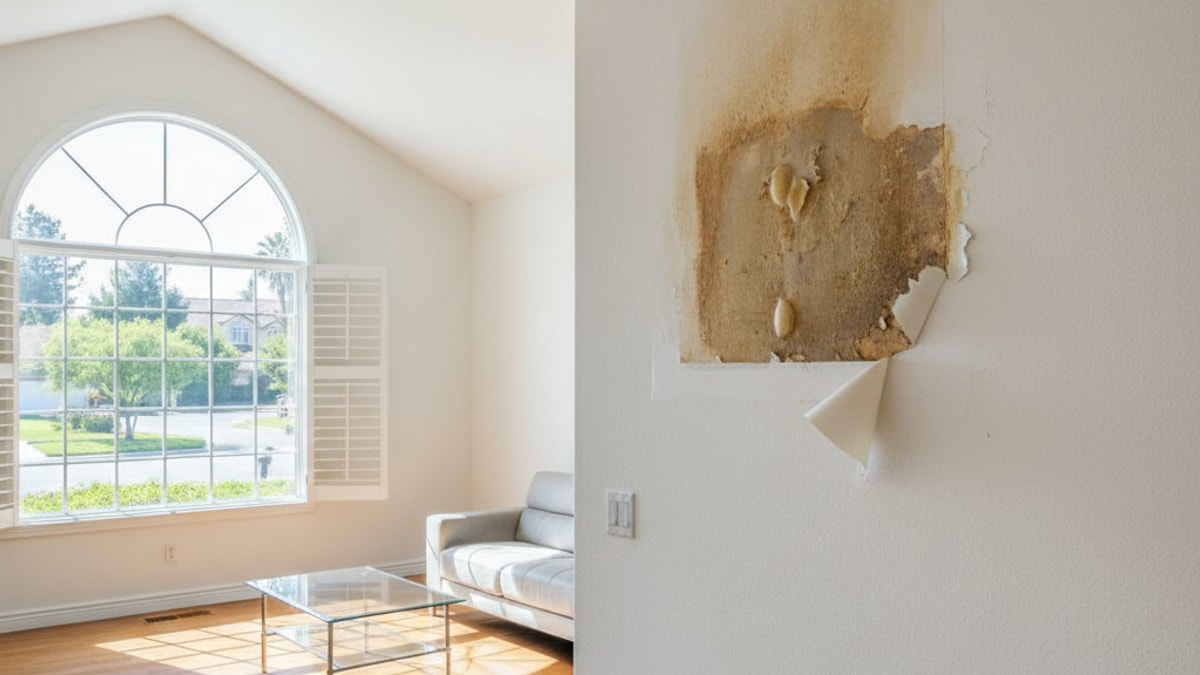
A 2023 CoreLogic analysis found that 18% of California home sales involved properties with undisclosed pre-existing water damage that surfaced during escrow. Forcing renegotiations, price cuts averaging $23,000, or outright deal collapses. The gap between sellers who navigate water damage disclosure successfully and those who face post-inspection fallout comes down to understanding California Civil Code §1102’s materiality threshold and choosing an exit strategy aligned with it.
We’ve worked across California’s real estate landscape long enough to recognise the pattern: the homeowners who exit cleanly either repair everything to code before listing, sell as-is to a cash buyer who waives inspection contingencies, or disclose comprehensively upfront and price accordingly. The ones who face legal exposure or deal collapse try to split the difference. Partial repairs without permits, vague disclosures, or cosmetic fixes over structural issues.
How do you sell a house with water damage in California without legal exposure or buyer fallout?
You sell a house with water damage in California through one of three legally compliant paths: (1) repair all damage to code with permits and disclose the remediation history, (2) sell as-is to a cash buyer or investor who accepts the property in current condition, or (3) list traditionally with full disclosure of all known defects and price the property to reflect repair costs. California Civil Code §1102 requires sellers to disclose any material facts affecting property value. Water damage always meets this threshold. The path you choose determines timeline (2 weeks to 6 months), net proceeds after costs, and legal risk profile.
The Real Financial Comparison: Repair vs As-Is vs Disclosed Traditional Sale
The question isn’t whether you can sell house water damage California. It’s which path preserves the most equity after accounting for holding costs, repair expenses, and price concessions. A property with $40,000 in documented water damage remediation needs presents three financially distinct outcomes.
Repair-before-listing means covering $40,000 in contractor costs, $8,000–$12,000 in permit and inspection fees, and 3–5 months of mortgage, tax, and insurance carrying costs averaging $3,200/month in California markets. Total pre-sale investment: $49,600–$56,000. You recapture this through higher list price. But only if appraisal supports the value, buyers don’t discover additional issues during inspection, and your market hasn’t softened during the repair window.
Cash as-is sales through investors or iBuyers close in 7–21 days with zero repair obligation. The trade-off is predictable: cash offers range 70–85% of after-repair value (ARV), meaning a $600,000 ARV property generates $420,000–$510,000 offers. On a property needing $40,000 in repairs, you’re leaving $50,000–$140,000 on the table compared to post-repair retail. But capturing that spread requires fronting repair capital and absorbing 4–6 months of market risk.
Traditional disclosed sales occupy the middle ground. You list at 85–92% of ARV, disclose all known defects in the Transfer Disclosure Statement (TDS), and let buyers negotiate inspection-based credits. This path works when damage is localised (one bathroom, not whole-house mould), buyers can secure financing despite the disclosed issues, and you’re willing to carry the property through a 45–90 day escrow while buyers complete due diligence.
California’s Legal Disclosure Framework and What Triggers Mandatory Reporting
California Civil Code §1102 through §1102.18 establishes the Transfer Disclosure Statement (TDS) requirement for residential 1–4 unit properties. The TDS asks explicit questions about water intrusion, flooding, drainage issues, and past repairs. And “Yes” answers require written explanation of the issue, when it occurred, and what remediation was completed.
Materiality is defined as any condition that would influence a reasonable buyer’s decision to purchase or the price they’d offer. Water damage always meets this standard because it signals potential mould, structural compromise, electrical hazards, and ongoing moisture intrusion. All of which affect habitability and value. Courts have consistently ruled that sellers who check “No” on water damage questions face liability even if they genuinely didn’t know about hidden damage, because California imposes a duty to inspect, not just a duty to disclose known defects.
The three-year statute of limitations on failure-to-disclose claims starts from discovery of the defect, not the sale date. A buyer who finds concealed water damage 18 months post-close can sue for rescission (unwinding the sale), price reduction, or repair costs plus attorney fees. Our team has seen sellers who saved $15,000 skipping pre-sale remediation face $60,000+ in legal settlements when buyers discovered undisclosed rot during remodelling.
Permit history matters as much as damage history. If previous water damage was repaired without required permits, you must disclose both the original damage and the unpermitted work. Buyers who discover unpermitted repairs during title search or inspection have contractual grounds to cancel or demand seller-funded permit resolution before close.
When Cash Buyers Make Financial Sense Despite the Discount
Cash buyers. Investment firms, iBuyers, and individual flippers. Purchase properties in as-is condition with no inspection contingency, no appraisal requirement, and no financing delays. The offer discount reflects their profit margin plus estimated repair costs, typically landing 70–85% of ARV.
This path makes mathematical sense in four specific scenarios. First: when carrying costs exceed the repair-discount gap. If your mortgage, property tax, insurance, and HOA total $4,000/month and traditional sale would take 5 months post-repair, you’re paying $20,000 in holding costs on top of repair expenses. Often erasing the price premium you’d capture through retail listing. Second: when you lack repair capital or creditworthiness to finance remediation. Selling as-is converts trapped equity immediately without requiring $50,000+ upfront investment.
Third: when the property has multiple defect categories beyond water damage. Foundation issues, electrical non-compliance, or permit violations that compound buyer financing obstacles. Conventional buyers struggle to secure loans on properties requiring $100,000+ in repairs; cash buyers price it in and close anyway. Fourth: when personal circumstances (job relocation, divorce, estate settlement) create a timeline that precludes 4–6 month repair-and-list processes. The discount for speed becomes a known, controllable cost rather than a variable risk.
Home Helpers evaluates properties throughout California with water damage ranging from isolated roof leaks to whole-house flood remediation needs. We provide written offers within 48 hours, close in as few as 7 days, and waive all inspection and appraisal contingencies. Our offers reflect current condition, not potential post-repair value, which eliminates the uncertainty of buyer negotiations over discovered defects. Homeowners who choose this path trade maximum gross proceeds for certainty, speed, and zero pre-sale capital requirement.
Sell House Water Damage California: Full Keyword Comparison
| Exit Strategy | Timeline to Close | Seller Repair Obligation | Disclosure Requirement | Financing Contingency Risk | Net Proceeds (% of ARV) | Best For |
|---|---|---|---|---|---|---|
| Cash As-Is Sale | 7–21 days | None. Sold in current condition | Must disclose known defects; buyer waives inspection rights | None. All-cash transaction | 70–85% | Immediate liquidity needs, no repair capital, multiple property defects |
| Traditional Sale (Post-Repair) | 4–6 months (3–5 months repair + 30–60 day escrow) | Full remediation to code with permits | Must disclose historical damage and remediation completed | High. Appraisal must support post-repair value | 95–100% | Sellers with repair capital, stable market, timeline flexibility |
| Disclosed As-Is Traditional | 45–90 days | None, but price adjusted for buyer’s estimated repair costs | Comprehensive TDS disclosure of all known defects | Medium. Buyer must secure financing despite disclosed issues | 85–92% | Localised damage, sellers unwilling to manage contractors, buyers willing to take on repairs |
Key Takeaways
- California Civil Code §1102 requires disclosure of all material defects including water damage, past flooding, drainage issues, and all remediation work. Checking “No” on the Transfer Disclosure Statement exposes sellers to rescission claims for three years post-close.
- Cash as-is buyers offer 70–85% of after-repair value but close in 7–21 days with no repair obligation, no financing contingency, and no inspection renegotiation. The 15–30% discount often equals or beats the net proceeds from repair-then-list after accounting for contractor costs, permits, and 4–6 months of carrying costs.
- Repair-before-listing captures 95–100% of market value but requires upfront capital of $40,000–$80,000 for typical water damage remediation, adds 3–5 months to your sale timeline, and introduces appraisal risk if post-repair value doesn’t support your target price.
- Disclosed traditional sales to conventional buyers work for localised damage (one room, not structural) where buyers can secure financing despite known defects. Expect 8–15% price concessions and 45–90 day escrow timelines with inspection-based renegotiation likely.
- Unpermitted water damage repairs must be disclosed separately from the original damage. Buyers who discover unpermitted work during title review have contractual grounds to cancel or demand seller-funded permit resolution before close.
What If: Sell House Water Damage California Scenarios
What If the Water Damage Is Only Cosmetic Staining With No Structural Impact?
Disclose it anyway and provide documentation proving no structural compromise. Even cosmetic water staining triggers TDS disclosure because buyers will question whether hidden mould or rot exists behind visible marks. The safe play: hire a licensed inspector to document that staining is surface-only with no moisture meter readings above 15% wood moisture content, no soft spots in drywall, and no microbial growth detected. Attach this report to your TDS and price the property assuming buyers will discount $3,000–$8,000 for cosmetic repair they’ll want to complete themselves.
What If I Already Started Repairs But Ran Out of Budget Halfway Through?
Disclose both the original damage and the incomplete remediation status, then choose between finishing the work or selling as-is. Partial repairs create the worst outcome: you’ve spent capital without reaching a marketable condition, and buyers will assume the incomplete work signals bigger problems you discovered mid-project. If you can’t fund completion, sell as-is to a cash buyer who prices in finishing costs. Trying to list a half-repaired property to conventional buyers invites low-ball offers and inspection deal-killers because financing underwriters flag incomplete work as a loan risk.
What If the Damage Occurred Years Ago and Was Fully Repaired With Permits?
Disclose the historical damage, the remediation completed, and provide permit sign-off documentation proving code compliance. Properly repaired water damage with permit closure is not a deal-killer. It’s a documented history that actually increases buyer confidence compared to properties with unknown moisture intrusion risk. Include contractor invoices, permit records, and final inspection approvals in your disclosure package. Buyers who see a paper trail showing professional remediation treat it as a solved issue; buyers who hear “there was water damage but it’s fixed” without documentation assume you’re hiding ongoing problems.
The Blunt Truth About Selling Water-Damaged Homes in California
Here’s the honest answer: sellers who try to hide water damage don’t save money. They defer a lawsuit. California’s disclosure laws are designed to surface defects before close, not after, and the three-year liability window means a $15,000 repair you skip today becomes a $60,000 settlement you pay in 2028 when the buyer’s contractor finds concealed rot during a kitchen remodel. The cases that go to litigation almost never involve sellers who disclosed too much; they involve sellers who disclosed nothing or disclosed vaguely hoping buyers wouldn’t ask follow-ups.
The financial analysis is equally unforgiving. Partial repairs without permits don’t increase sale price. They increase buyer skepticism. Cosmetic patches over structural issues get caught during inspection and kill deals at day 25 of a 30-day escrow when you’re already emotionally moved on. The homeowners who net the most after accounting for time, capital, and risk are the ones who pick one lane. Full remediation with permits, comprehensive disclosure with price adjustment, or as-is cash sale. And execute it completely rather than hedging across all three.
The Exit Path No One Regrets: Certainty Over Optimisation
The mistake most sellers make isn’t choosing the wrong exit path. It’s choosing no path and hoping the issue resolves through vague disclosure and buyer goodwill. Water damage doesn’t age well. It compounds. Mould spreads. Buyers who discover it during inspection don’t negotiate in good faith; they either cancel or demand credits exceeding actual repair costs because they’ve lost trust in your representations.
Our team’s recommendation: if you can afford the time and capital to repair to code with permits, do it. You’ll recapture the investment through higher sale price and face zero post-close liability. If you can’t or won’t fund repairs, sell as-is to a cash buyer who prices in current condition and waives inspection rights. The path that consistently fails is the middle ground: minimal repairs, optimistic disclosure, and hope that buyers won’t dig deep. California’s legal framework and buyer due diligence norms punish that approach every time.
If you’re holding a California property with water damage and need a written cash offer within 48 hours, contact Home Helpers at https://www.homehelpersgroup.com/. We’ve purchased hundreds of properties across California in as-is condition. Water damage, foundation issues, permit violations, and estate settlements where heirs need immediate liquidity. No repair obligation, no inspection renegotiation, and closing timelines as short as 7 days when you need speed more than you need to extract every dollar of theoretical equity.
Frequently Asked Questions
Do I legally have to disclose water damage when selling a house in California?
Yes — California Civil Code §1102 requires sellers to disclose all material facts affecting property value, and water damage always meets this threshold because it signals potential mould, structural compromise, and ongoing moisture issues. You must disclose known water intrusion, past flooding, drainage problems, and all remediation work on the Transfer Disclosure Statement. Failure to disclose exposes you to buyer lawsuits for rescission or damages for three years after close.
Can I sell my California house with water damage without making any repairs?
Yes — you can sell as-is to cash buyers or investors who purchase properties in current condition with no repair obligation and no inspection contingency. Cash offers typically range 70–85% of after-repair value, reflecting the buyer’s repair costs and profit margin. You must still disclose all known defects, but as-is buyers waive the right to renegotiate or cancel based on inspection findings.
How much does water damage reduce my home’s sale price in California?
Water damage reduces sale price by 8–30% depending on severity, location, and disclosure approach. Localised cosmetic damage (one bathroom) typically results in 8–12% price reduction through buyer credits. Structural damage requiring foundation or framing work can reduce value 20–30%. Cash as-is buyers offer 70–85% of after-repair value. The actual impact depends on whether you repair before listing, disclose and adjust price, or sell as-is.
What happens if a buyer discovers undisclosed water damage after closing in California?
Buyers who discover undisclosed water damage after closing can sue for rescission (unwinding the sale), monetary damages equal to repair costs, or price reduction. California’s three-year statute of limitations runs from discovery of the defect, not the sale date. Courts consistently rule in favour of buyers when sellers check ‘No’ on Transfer Disclosure Statement water damage questions, even if the seller claims they didn’t know about hidden issues.
Do I need permits to repair water damage before selling my California home?
Yes — any structural repairs, electrical work, or plumbing modifications require permits under California building codes. Cosmetic drywall or paint repairs may not require permits, but if remediation involves replacing framing, rewiring, or rerouting plumbing, permits are mandatory. Selling a property with unpermitted water damage repairs requires disclosing both the original damage and the unpermitted work, which often triggers buyer financing issues or deal cancellations.
How long does it take to sell a house with water damage in California?
Timeline depends on your exit strategy. Cash as-is sales close in 7–21 days with no repair obligation. Traditional sales after completing repairs take 4–6 months (3–5 months for remediation plus 30–60 day escrow). Disclosed as-is sales to conventional buyers average 45–90 days but carry higher cancellation risk because buyers must secure financing despite known defects.
Will buyers be able to get financing for my house if I disclose water damage?
Buyers can secure financing for disclosed water damage if the damage is localised, non-structural, and the property appraises at contract price. Lenders require properties to meet minimum habitability standards — active leaks, extensive mould, or structural compromise will prevent loan approval until repaired. FHA and VA loans have stricter requirements than conventional loans, often requiring complete remediation before funding. Cash buyers eliminate financing risk entirely.
What’s the difference between selling to a cash buyer versus listing with a real estate agent after water damage?
Cash buyers purchase in as-is condition with no repairs, close in 7–21 days, and offer 70–85% of after-repair value with zero financing or inspection contingencies. Listing with an agent after repairs captures 95–100% of market value but requires 3–5 months of repair work, $40,000–$80,000 upfront capital, permits, and appraisal risk. The choice depends on whether you prioritise speed and certainty or maximum gross proceeds.
Can I sell a California house with active water leaks or ongoing moisture problems?
Yes, but only to cash buyers or investors — conventional buyers cannot secure financing on properties with active habitability issues. You must disclose ongoing leaks and moisture intrusion. Cash buyers price in the cost of stopping the leak plus remediation, typically offering 65–75% of after-repair value for properties with active water problems versus 75–85% for properties with resolved historical damage.
What documentation do I need to provide when disclosing past water damage repairs?
Provide contractor invoices, permit records, final inspection sign-offs, moisture testing results, and before/after photos if available. Documentation proves remediation was completed to code and gives buyers confidence the issue is resolved. Properties with documented repair history and permit closure sell faster and for higher prices than properties where sellers claim ‘it was fixed’ without supporting evidence.
