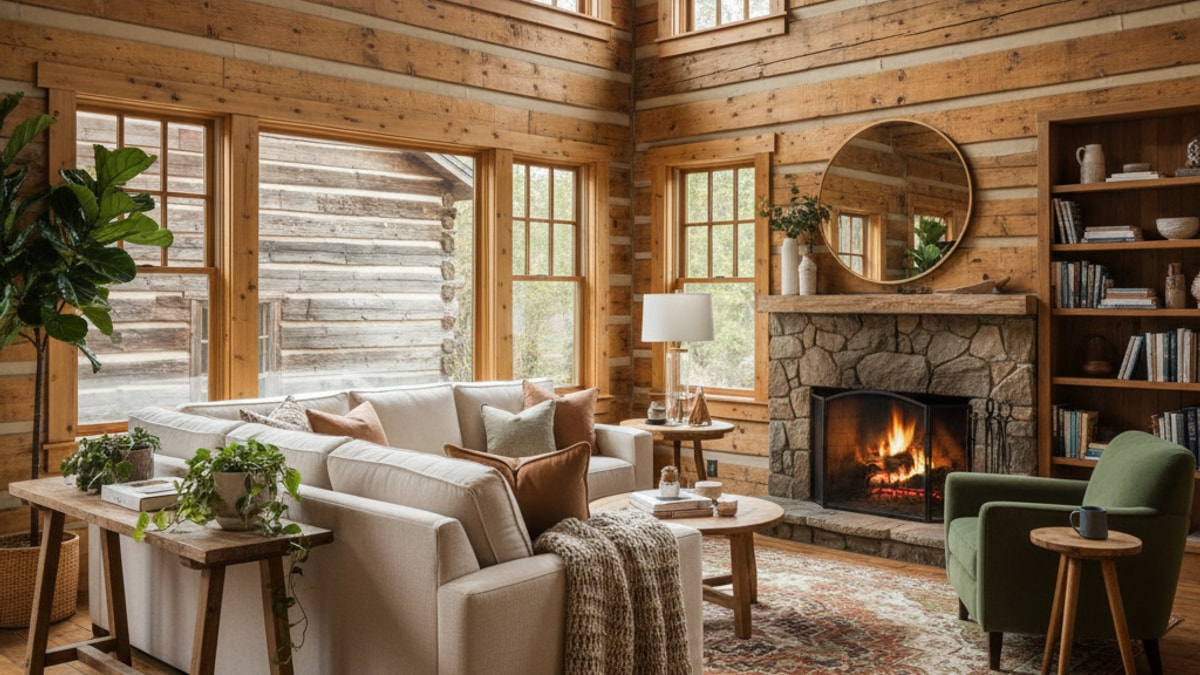
There’s a powerful romance to a log home. It evokes images of crackling fires, snow-covered pines, and a rugged self-sufficiency that feels a world away from the suburbs. We get it. Our team at Home Helpers has walked through countless stunning log homes, and we appreciate the craftsmanship and the dream they represent. But when the time comes to sell, that dream can collide with a formidable market reality. The question we hear all the time is, “Why are log homes harder to sell?”
It’s not your imagination. They often sit on the market longer, attract fewer offers, and can be a source of immense frustration for sellers. It isn’t about a lack of charm or quality. It’s about a specific set of challenges—from maintenance concerns to financing hurdles—that simply don’t exist for a traditional stick-built house. Let’s be honest, understanding these obstacles is the absolute first step to overcoming them. We’re here to pull back the curtain and give you an unflinching look at what you’re up against, and more importantly, what our experience shows you can do about it.
The Niche Buyer Pool: You’re Not Selling to Everyone
This is the biggest factor, and we can’t stress it enough. When you sell a conventional three-bedroom, two-bath ranch-style home, your potential buyer pool is massive. It includes first-time buyers, downsizing retirees, growing families, and investors. They might not love the paint color, but they can see themselves living within those familiar walls. A log home is different. It’s a statement. It’s a lifestyle choice.
Your buyer isn’t just looking for a house; they’re specifically looking for a log house. They have to love the aesthetic—the exposed wood, the rustic feel, the whole nine yards. Someone who prefers modern, minimalist, or even traditional colonial styles will likely scroll right past your listing without a second thought. This immediately shrinks your audience from a vast ocean to a small, specific pond. You’re not just waiting for a buyer; you’re waiting for the right buyer. And that takes time.
Our team has found that sellers who don’t grasp this from the outset get discouraged quickly. They see neighboring conventional homes go under contract in weeks while theirs sits for months. It’s not a reflection of your home’s value, but of its highly specific appeal. Acknowledging this reality from day one helps set realistic expectations for the timeline and marketing strategy. You’re not just selling a property; you’re selling a very particular dream.
Maintenance: The Looming Specter of Upkeep
Let’s talk about the elephant in the room: maintenance. For a prospective buyer, the fear of upkeep is probably the single greatest deterrent. It’s not just a perception; it’s a reality that log homes demand a relentless and specialized maintenance ritual that can be both time-consuming and expensive. While the seller may be used to it, a buyer new to this world sees a giant, costly question mark.
What does this involve? So much.
First, there’s staining and sealing. Unlike vinyl siding or brick, logs are organic material exposed to the elements. They need to be professionally cleaned and re-stained every three to seven years, depending on the climate and sun exposure. This isn’t a simple weekend paint job. It’s a massive undertaking that can cost anywhere from $5,000 to $15,000 or more for an average-sized home. If a buyer walks up and sees faded, graying logs or peeling sealant, they don’t see character. They see a five-figure bill waiting for them the day they move in.
Then comes chinking. That’s the flexible sealant that goes between the logs. Over time, it can crack, pull away, or fail, creating entry points for moisture, air, and pests. Inspecting and repairing chinking is an annual chore. A full re-chinking job is a catastrophic expense that can run into the tens of thousands. We’ve seen buyers walk away from deals instantly after an inspector points out widespread chinking failure.
And we have to mention pests. Carpenter bees, termites, and powderpost beetles see a log home as an all-you-can-eat buffet. Diligent, preventative pest control is non-negotiable. Any evidence of pest damage, past or present, can send buyers running for the hills. They envision a constant battle against nature, and for many, that’s just too much work. The key takeaway for sellers is this: you must be impeccable with your maintenance records. Having invoices for recent staining, pest treatments, and repairs can transform a buyer’s fear into confidence. It’s your best weapon.
Financing and Insurance: The Institutional Hesitation
Here’s a hurdle many sellers don’t even see coming until it’s too late. Getting a mortgage or a homeowner’s insurance policy for a log home can be surprisingly difficult. Why? Because many lenders and insurers classify them as ‘non-standard’ or ‘unique’ construction.
From a lender’s perspective, risk is everything. A log home’s smaller buyer pool means it has lower marketability and liquidity. If the borrower defaults, the bank worries it will have a harder time selling the property to recoup its investment. This can lead to stricter lending requirements, higher down payment demands, or even outright loan denials from larger, more conventional banks. Buyers may have to seek out specialized lenders who are comfortable with log homes, which can slow down the entire process.
Insurance companies have their own set of concerns. They often perceive log homes as having a higher risk of fire, even though modern log homes are often built to be quite fire-resistant (large timbers char on the outside, protecting the structural integrity within). The bigger issue for them is replacement cost. If the home is severely damaged, finding skilled log home builders and sourcing the specific type of logs to perform a repair is far more complex and costly than fixing a standard drywall-and-siding house. This translates to higher premiums for the buyer, which can impact their overall budget and their ability to qualify for the mortgage. As a seller, being prepared with a list of log-home-friendly lenders and insurers can be a lifesaver for your potential buyer.
BREAKING: House JUST Passed the $1 TRILLION Infrastructure BILL!
This video provides valuable insights into why are log homes harder to sell, covering key concepts and practical tips that complement the information in this guide. The visual demonstration helps clarify complex topics and gives you a real-world perspective on implementation.
The Appraisal Gap: How Do You Value a Unicorn?
This is where deals most often fall apart. A home appraisal is a critical step in the mortgage process. The appraiser’s job is to determine the home’s fair market value, primarily by comparing it to recent sales of similar properties in the area. These are called ‘comparables’ or ‘comps’.
So, what happens when your log home is the only one for 50 miles? What if the only other log homes that sold recently were half the size or on a tiny lot? This is the central problem. Finding good comps for a log home is notoriously difficult. Appraisers who are unfamiliar with this type of construction might struggle to accurately assess its value. They may incorrectly compare it to stick-built homes, which almost always results in a lower valuation. We’ve seen it happen time and again.
A low appraisal is catastrophic. If the home appraises for less than the agreed-upon sale price, the lender will only finance the appraised amount. This leaves the buyer with a few bad options: come up with thousands of dollars in cash to cover the gap, try to renegotiate the price with you, or walk away from the deal entirely. To combat this, it’s crucial for you and your agent to do the homework upfront. Provide the appraiser with a packet of information detailing the home’s unique features, construction quality, maintenance history, and any relevant log home sales you can find, even if they’re a bit further away. You have to help them understand the true value.
| Feature | Conventional Stick-Built Home | Log Home | Seller Impact |
|---|---|---|---|
| Buyer Pool | Very Broad (appeals to most demographics) | Highly Niche (appeals to a specific lifestyle) | Longer time on market is expected. Marketing must be highly targeted. |
| Maintenance | Standard (painting, roof, gutters) | Specialized (staining, chinking, pest control) | Buyers are often fearful of the cost and effort. Impeccable maintenance records are critical. |
| Financing | Widely available from all lenders | Can be difficult; considered ‘non-standard’ | Pre-qualifying buyers is essential. Have a list of log-home-friendly lenders ready. |
| Insurance | Standard rates, easy to obtain | Higher premiums, fewer carrier options | High insurance costs can affect buyer affordability. A clean inspection report helps. |
| Appraisal | Plentiful ‘comps’ make valuation straightforward | ‘Comps’ are often scarce or non-existent | Risk of a low appraisal is high. Sellers must provide detailed documentation to the appraiser. |
Location, Location… Isolation?
Part of the core appeal of a log home is often its setting. They are frequently built on large, wooded lots in rural or semi-rural areas, offering peace, privacy, and a connection to nature. For the right person, this is paradise. For the average home buyer, it can be a deal-breaker.
Think about the typical buyer’s checklist: good school district, short commute to work, proximity to grocery stores and restaurants, access to healthcare. Rural properties often struggle to tick these boxes. The very seclusion that makes your property a serene retreat can also make it impractical for a family with demanding schedules. This factor ties directly back to the niche buyer pool. You are not just looking for someone who loves logs; you are looking for someone who loves logs and is willing to embrace a more remote lifestyle. That could mean a longer drive for milk, less reliable internet service, and a different sense of community. It’s a significant trade-off that a large portion of the market is simply unwilling to make.
How to Overcome These Challenges: Our Professional Advice
Okay, so we’ve laid out the formidable challenges. It might sound a bit bleak. But our experience at Home Helpers shows that selling a log home is far from impossible; it just requires a different strategy. You can’t market it like a typical suburban house. You have to lean into its uniqueness and proactively solve problems before they arise.
First, nail the first impression. Curb appeal is ten times more important for a log home. The exterior logs are the main event. Before you even think about listing, invest in having the home professionally cleaned and, if needed, re-stained. It’s a significant expense, but it’s the single best return on investment you can make. A home with rich, vibrant, and perfectly sealed logs screams ‘well-maintained’. A home with faded, weathered logs screams ‘money pit’.
Second, gather your documentation. Create a binder that contains every piece of paper related to the home’s upkeep. This includes receipts for staining, records of pest control treatments, manuals for any specialized equipment, and contact information for the contractors you’ve used. Presenting this to a potential buyer is a powerful tool. It replaces their fear of the unknown with the confidence that the home has been meticulously cared for. This is a practice we’ve refined over years, and it delivers real results.
Third, prepare for the appraisal. Don’t leave it to chance. Work with your real estate agent to pull any and all potential comps. Document every upgrade and special feature of your home, from the type of wood used to the quality of the foundation. Having this information ready for the appraiser makes their job easier and dramatically increases the odds of an accurate valuation. You can learn more about our unique approach to market preparation, which covers this in detail.
Finally, market the lifestyle, not just the logs. Your photos and listing description should sell the dream. Are you near a great fishing lake? Show it. Is there a fantastic hiking trail out back? Mention it. Use evocative language that appeals to the person who wants to escape the hustle and bustle. Your buyer is looking for an experience, so make sure your marketing delivers it. We cover many more advanced selling strategies on the Home Helpers blog, which can be a fantastic resource.
The journey of selling a log home is a marathon, not a sprint. It requires patience, preparation, and a deep understanding of your target audience. The key is to anticipate the hurdles—maintenance, financing, appraisal—and have a solution ready before they become deal-breakers. By presenting a beautiful, impeccably maintained home and arming your buyers with the information they need to feel confident, you can successfully pass that unique dream on to its next owner. If you feel overwhelmed by these steps, remember that expert guidance can make all the difference. Getting in touch with the Home Helpers team is a great way to get personalized advice for your specific property and situation.
It’s not about finding just any buyer. It’s about connecting with the one person who has been searching for exactly what your home offers. It’s a more deliberate process, but when that connection is made, it’s incredibly rewarding. Your job is to make it as easy as possible for them to say ‘yes’.
Frequently Asked Questions
Does the type of log used in construction affect resale value?
Absolutely. Homes built with high-quality, naturally rot-resistant woods like cedar or cypress are often more desirable and can command a higher price. The size and profile of the logs—for example, handcrafted full-scribe logs versus milled D-logs—also impact the home’s aesthetic and perceived value.
How important is a pre-listing inspection for a log home?
We consider it almost non-negotiable. A pre-listing inspection allows you to identify and address potential issues like moisture, rot, or pest damage before a buyer ever sees them. It provides transparency and builds immense trust, preventing surprises that could kill a deal during the buyer’s inspection period.
Should I update the kitchen and bathrooms before selling my log home?
It’s a delicate balance. While modern amenities are appealing, overly contemporary updates can clash with the rustic aesthetic. We recommend focusing on tasteful, high-quality updates that complement the home’s character, such as natural stone countertops, updated fixtures, and modern appliances in a classic finish.
How much longer does it typically take to sell a log home compared to a conventional one?
While market conditions vary, it’s common for a well-priced log home to take two to three times longer to sell than a comparable conventional home. This is primarily due to the smaller, more niche buyer pool. Patience and a strategic marketing plan are essential.
Can I get a VA or FHA loan for a log home?
It can be challenging, but it’s not impossible. Both VA and FHA loans have specific requirements for the home’s condition and construction. The key is ensuring the home is in excellent condition and sits on a permanent foundation, as these programs are often wary of ‘unique’ properties.
What is the biggest mistake log home sellers make?
The most common mistake we see is neglecting the exterior maintenance. Sellers often become ‘log blind’ to the fading stain or minor cracks in the chinking. Buyers, however, see these as major red flags and indicators of expensive deferred maintenance.
Does the brand of a log home kit affect its value?
Yes, it can. A home built from a kit by a well-regarded manufacturer with a long history (like Kuhns Bros. or Katahdin) can provide buyers with a sense of quality and confidence. Having the original plans and documentation from the kit manufacturer is a significant selling point.
Are log homes energy efficient, and how can I prove it to buyers?
They can be very energy efficient due to the thermal mass of the logs, which absorb and radiate heat slowly. To prove this, provide buyers with past utility bills for the last 12-24 months. Consistently low heating and cooling costs are powerful, tangible evidence of the home’s efficiency.
How do you stage a log home for sale?
The goal is to enhance the cozy, rustic feel without making it feel dark or cluttered. We recommend using warm lighting, decluttering to maximize space, and using furniture that complements the scale of the rooms. Avoid overly modern decor that can feel out of place and detract from the home’s natural charm.
Will having a metal roof help sell my log home?
A metal roof is often seen as a huge plus by buyers. It’s durable, long-lasting, fire-resistant, and aesthetically fitting for a rustic home. It signals that a major capital expense has already been taken care of, which can be a very attractive feature.
What’s the best time of year to list a log home for sale?
Late spring and early fall are often ideal. These seasons allow you to showcase the property’s landscaping and natural setting beautifully. Summer can also be strong, as buyers envision enjoying the outdoors, while winter photos with snow can be magical but may hide the property’s grounds.
Is it harder to sell a log home in a suburban area?
It can be. A log home in a typical subdivision can feel out of place, making it harder for both buyers and appraisers to assess its value. Its ideal setting is typically a rural or semi-rural one where its rustic character feels more at home and comps are more likely to be found.
