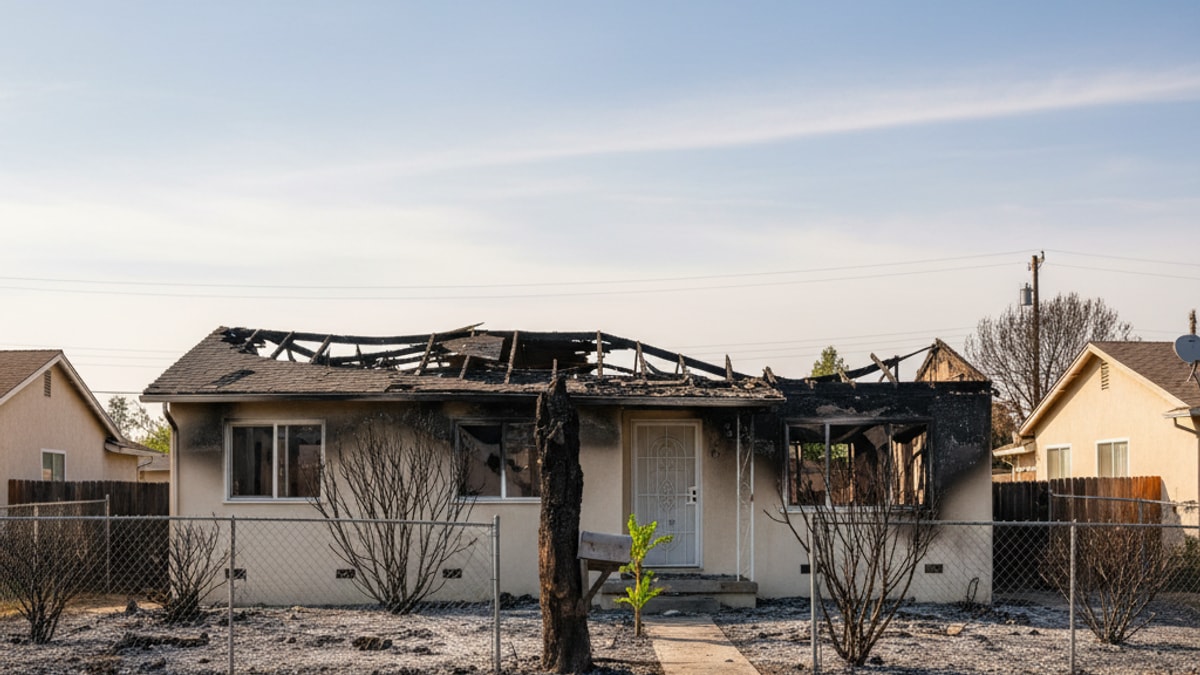
California’s 2017–2023 wildfire seasons destroyed more than 47,000 structures statewide, according to CAL FIRE’s damage assessment reports. A significant portion of those homes have been rebuilt and relisted. Often at prices 15–30% below comparable properties with no fire history. That discount looks attractive until you discover that the rebuilding contractor never pulled final inspection signoffs, the title company excluded wildfire damage from coverage, or your homeowners insurance application gets flagged for automatic denial because the property appears in loss databases tied to catastrophic fire events. We’ve worked with dozens of clients navigating wildfire damaged home purchases in California. The gap between a legitimate opportunity and a financial disaster comes down to three verifications most buyers skip entirely.
Our team has reviewed enough wildfire-affected properties to recognise the pattern: the discount reflects real risk, and that risk transfers entirely to you at closing unless you verify remediation completeness, title insurability, and insurance availability before you sign. The homes that pass all three checks can be solid purchases. The ones that don’t will cost you far more than the initial savings.
What should I verify before buying a wildfire damaged home in California?
Before purchasing a wildfire damaged home in California, verify that all structural repairs were completed with final inspection signoffs from the local building department, confirm that your title insurance policy does not exclude wildfire-related claims, and obtain written confirmation from at least two insurance carriers that they will issue a homeowners policy at standard rates. Properties rebuilt without permits, or with unresolved code violations, cannot be insured at any price. And unpermitted work voids most title coverage for future fire damage.
The direct answer is yes, you can buy a wildfire damaged home in California. But only if the rebuilding process followed the full permit-to-final-inspection sequence required by state law. The common mistake is assuming that ‘rebuilt’ means ‘code-compliant.’ It doesn’t. California Building Code Section 105.1 requires permits for structural repair, electrical, plumbing, and HVAC work. And every permitted project must receive a final inspection signoff before the work is legally complete. If the seller rebuilt without permits, or pulled permits but never closed them with final inspections, you are buying a home that technically contains unpermitted construction. That status disqualifies you from standard homeowners insurance, prevents refinancing, and makes you personally liable for bringing the property into compliance before you can sell. This article covers the specific permit verification steps that determine whether a fire-damaged property is insurable, the title insurance exclusions that shift fire liability onto you, and the three insurance underwriting red flags that trigger automatic policy denials for California wildfire properties.
What Permit Documentation You Must Verify Before Purchase
Every wildfire damaged home in California that underwent structural repair should have a documented permit history with the local building department. Searchable by address or Assessor’s Parcel Number (APN). The permit record must show: (1) the initial building permit number and issue date, (2) all associated electrical, plumbing, and mechanical permits, and (3) final inspection approval with a signed-off date for each permit. If any permit remains ‘open’. Meaning it was issued but never finalled. The work is legally incomplete, and the property cannot pass a code compliance inspection required by most lenders and insurers.
California Health and Safety Code Section 17995.4 allows local jurisdictions to impose abatement orders on properties with unpermitted work, requiring the owner to either obtain retroactive permits and inspections or demolish the non-compliant construction. As the buyer, that liability transfers to you at closing. The cost to bring unpermitted fire repairs into compliance ranges from $15,000 to $60,000 depending on scope. Electrical panel replacements, structural framing corrections, and fire-rated material upgrades are the most common deficiencies.
Request a permit history report directly from the building department before you make an offer. If the seller cannot produce final inspection signoffs for all structural work completed after the fire, the property is not insurable at standard rates. And most lenders will not approve financing without proof of code compliance. We’ve seen buyers assume they can ‘fix it after closing’. They cannot. Once you own the property, you own the compliance liability, and retroactive permitting for fire damage is significantly more expensive than obtaining permits during the original rebuild.
How Title Insurance Exclusions Shift Fire Liability to You
Standard title insurance policies in California exclude coverage for loss or damage caused by fire, flood, earthquake, or other environmental hazards unless the policyholder purchases an ALTA Homeowner’s Policy with extended coverage endorsements. Most buyers receive a standard CLTA (California Land Title Association) policy, which covers only defects in title. Liens, encumbrances, easements. But explicitly excludes physical damage to the property. If the wildfire damaged home you’re buying has unresolved insurance claims, contractor liens, or code enforcement actions tied to the original fire, those encumbrances remain attached to the title even after you close.
The critical verification is requesting a title commitment (also called a preliminary title report) that lists all recorded exceptions. Liens, easements, and exclusions that will not be covered by the policy. Look specifically for: (1) mechanics’ liens filed by contractors who performed fire repair work and were not paid, (2) code enforcement liens imposed by the city or county for abatement of fire damage, and (3) exclusions for ‘loss arising from fire damage’ in the policy’s exception schedule. If any of these appear, negotiate their removal before closing. Or walk away.
Mechanics’ liens survive property transfers in California under Civil Code Section 8400, meaning the unpaid contractor can foreclose on the lien even after you’ve purchased the home. Code enforcement liens operate the same way under Health and Safety Code Section 17980. The municipality’s claim for abatement costs attaches to the property, not the prior owner. Title insurance will not cover either, because both fall under the ‘known defects’ exclusion. Our experience with wildfire damaged home purchases in California shows that properties listed below market value often carry one or both lien types. The discount exists because the seller is offloading liability they cannot clear themselves.
Why Insurance Underwriters Deny Coverage for Fire-History Properties
Homeowners insurance underwriting for wildfire damaged homes in California is governed by loss databases maintained by the Comprehensive Loss Underwriting Exchange (CLUE) and the Insurance Services Office (ISO). Every insurance claim filed on a property is recorded in these databases with the claim type, date, payout amount, and cause of loss. If the property you’re purchasing shows a catastrophic fire claim in the past seven years, most standard carriers. State Farm, Allstate, Farmers. Will either deny coverage outright or offer a policy with a ‘fire exclusion’ rider that excludes future fire damage from coverage.
The underwriting logic is straightforward: properties located in Very High Fire Hazard Severity Zones (VHFHSZ) as designated by CAL FIRE, and properties with prior fire claims, statistically face higher loss probability. California Insurance Code Section 675.1 allows insurers to non-renew or deny policies in high-risk zones without violating fair access requirements. And they do. As of 2026, approximately 185,000 California properties are considered ‘uninsurable’ in the voluntary market, forcing homeowners into the FAIR Plan, California’s insurer of last resort.
Before you make an offer on a wildfire damaged home in California, contact at least two insurance carriers and request a binding quote based on the property’s CLUE report and wildfire history. Do not rely on the seller’s representation that ‘insurance is available’. Verify it yourself. If only the FAIR Plan will cover the property, calculate the true cost: FAIR Plan premiums for fire coverage in VHFHSZ zones range from $3,000 to $8,000 annually for a $500,000 dwelling. Two to four times the cost of a standard policy. That premium difference over a 30-year mortgage adds $90,000 to $240,000 to your total ownership cost, erasing any purchase price discount.
Wildfire Damaged Home California: Property Type Comparison
| Property Status | Permit Documentation | Title Insurance Coverage | Standard Insurance Availability | Bottom Line |
|---|---|---|---|---|
| Rebuilt With Finalled Permits | All structural, electrical, plumbing permits closed with final inspection signoffs | Standard CLTA policy covers title defects; ALTA upgrade recommended for fire coverage | Available from 2–3 standard carriers if outside VHFHSZ; FAIR Plan if inside zone | Insurable and financeable if permits verify; confirm no open liens |
| Rebuilt Without Permits | No permit records, or permits issued but never finalled | Standard CLTA excludes unpermitted work; no coverage for future fire damage | Automatic denial from all standard carriers; FAIR Plan will not cover unpermitted structures | Uninsurable until retroactive permits obtained and inspections passed |
| Partial Repair (Cosmetic Only) | Minor repairs may not require permits; no structural work documented | Standard CLTA covers title only; physical damage exclusions apply | Underwriters require full rebuild verification; partial repairs trigger elevated risk classification | Difficult to insure; lenders may deny financing without proof of full structural restoration |
| Demolished and Rebuilt on Same Lot | New construction permits with full inspection sequence | New title policy issued at rebuild completion; no fire history on new structure | Treated as new construction if original structure fully demolished and new APN assigned | Insurability depends on VHFHSZ designation, not prior fire. Best option for clean title |
Key Takeaways
- Wildfire damaged homes in California require verification of finalled building permits for all structural, electrical, and plumbing repairs. Unpermitted work disqualifies the property from standard insurance and financing.
- Title insurance policies in California exclude fire damage coverage unless you purchase an ALTA Homeowner’s Policy with extended endorsements. Request a preliminary title report to identify mechanics’ liens and code enforcement liens before closing.
- Properties with catastrophic fire claims in the CLUE database face automatic denial from most standard insurance carriers, forcing buyers into the California FAIR Plan at premiums 2–4 times higher than standard policies.
- Mechanics’ liens and code enforcement liens filed after wildfire damage survive property transfers and remain the new owner’s liability under California Civil Code Section 8400 and Health and Safety Code Section 17980.
- Insurance underwriting red flags include VHFHSZ zone designation, prior fire claims within seven years, and unpermitted reconstruction. Verify insurability with written carrier confirmation before making an offer.
What If: Wildfire Damaged Home California Scenarios
What If the Seller Claims All Repairs Were Completed But Cannot Produce Permit Records?
Walk away from the transaction or negotiate a significant price reduction to cover retroactive permitting costs. California law requires permits for structural, electrical, plumbing, and HVAC work. If the seller cannot produce final inspection signoffs, the work is legally incomplete regardless of its physical condition. Retroactive permitting requires hiring a licensed contractor to assess code compliance, correct deficiencies, and schedule inspections with the building department. Costs range from $15,000 to $60,000 depending on the scope of unpermitted work, and most lenders will not approve financing until permits are closed. The seller’s inability to produce records is not an oversight. It’s evidence that the rebuild bypassed the legal process, and that liability transfers entirely to you at closing.
What If My Insurance Agent Says Coverage Is Available But Won’t Provide a Written Quote?
Demand a binding written quote that includes the property address, CLUE report review, and confirmation that fire damage is not excluded from coverage. Verbal assurances from insurance agents are not enforceable, and carriers routinely deny policies post-application once underwriting reviews the full loss history. Request quotes from at least two carriers, and if both decline or offer only FAIR Plan coverage, calculate the true annual premium difference before proceeding. A $6,000 FAIR Plan premium versus a $2,000 standard policy adds $120,000 to your 30-year ownership cost. More than offsetting most purchase price discounts on wildfire damaged homes in California.
What If the Title Report Shows an Open Mechanics’ Lien Filed by a Fire Repair Contractor?
Require the seller to satisfy the lien before closing, or negotiate a price reduction equal to the lien amount plus 20% to cover legal and administrative costs of clearing it yourself. Mechanics’ liens in California remain attached to the property under Civil Code Section 8400, meaning the contractor can foreclose on the lien even after you purchase the home. Title insurance will not cover mechanics’ liens because they are ‘known defects’ listed in the preliminary report. If the seller refuses to clear the lien, the property is not financeable. Most lenders will not approve a loan with unresolved contractor claims on title. Our standard recommendation: walk away from any wildfire damaged home in California with unresolved liens unless the seller agrees to full remediation at their expense before the close of escrow.
The Unflinching Truth About Wildfire Damaged Homes in California
Here’s the honest answer: most wildfire damaged homes in California listed at significant discounts are priced that way because the seller knows something you don’t. Unpermitted repairs, unresolved liens, or uninsurable status. The homes that were rebuilt correctly, with permits, final inspections, and clean title, sell at near-market rates because they qualify for standard financing and insurance. The ones listed 20–30% below comparable properties almost always carry one of three defects: incomplete permit records, mechanics’ liens filed by unpaid contractors, or automatic insurance denials due to VHFHSZ designation and prior fire claims. The discount is not a gift. It’s compensation for risk the seller cannot resolve themselves. If you proceed without verifying permits, title exceptions, and insurance availability in writing, you are assuming liability that no purchase price reduction justifies. We’ve seen buyers lose their entire down payment trying to bring unpermitted fire repairs into compliance after closing, or abandon properties they cannot insure or refinance. The verification process takes two weeks and costs less than $1,000. Skipping it to ‘move quickly’ on a discounted listing is the single most expensive mistake California homebuyers make in wildfire-affected markets.
If the seller completed the rebuild properly, they’ll have the documentation to prove it. Permit records, final inspections, paid contractor invoices, and title free of liens. If they don’t, assume the worst and price your offer accordingly, or find a different property. The market contains enough correctly rebuilt wildfire damaged homes in California that you don’t need to gamble on one with incomplete records. The discount only matters if you can actually close, insure, and eventually sell the property. And without clean permits and title, none of those outcomes are guaranteed.
Frequently Asked Questions
How does wildfire damaged home California work?
wildfire damaged home California works by combining proven methods tailored to your needs. Contact us to learn how we can help you achieve the best results.
What are the benefits of wildfire damaged home California?
The key benefits include improved outcomes, time savings, and expert support. We can walk you through how wildfire damaged home California applies to your situation.
Who should consider wildfire damaged home California?
wildfire damaged home California is ideal for anyone looking to improve their results in this area. Our team can help determine if it’s the right fit for you.
How much does wildfire damaged home California cost?
Pricing for wildfire damaged home California varies based on your specific requirements. Get in touch for a personalized quote.
What results can I expect from wildfire damaged home California?
Results from wildfire damaged home California depend on your goals and circumstances, but most clients see measurable improvements. We’re happy to share case examples.
